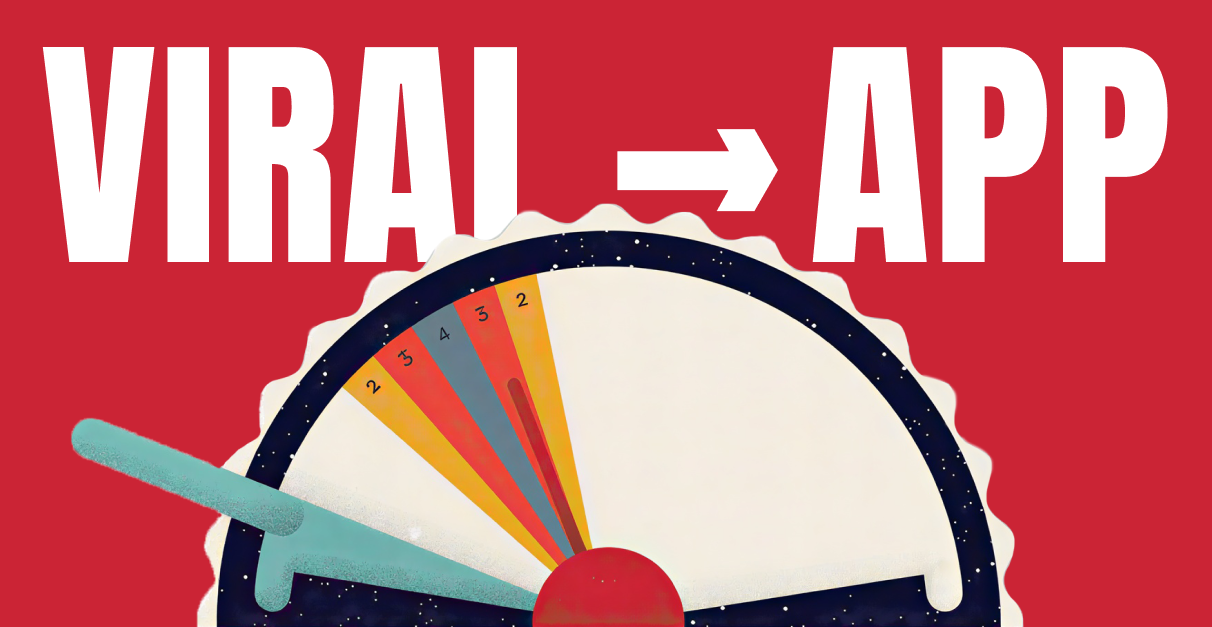
Most consumer apps start with a product and then search for distribution.
He is doing the reverse.
The publisher behind two fast-growing party game apps seems to be using the same strategy twice: make a simple format go viral through native short-form content, then turn that idea into an app.
A look behind the scenes
One app launched in December and is already doing 20K downloads and around $10K in revenue over the last 30 days.
The second launched in February and hit 10K downloads in its first 24 days.
Behind both projects, there’s Tomi Arakaki.
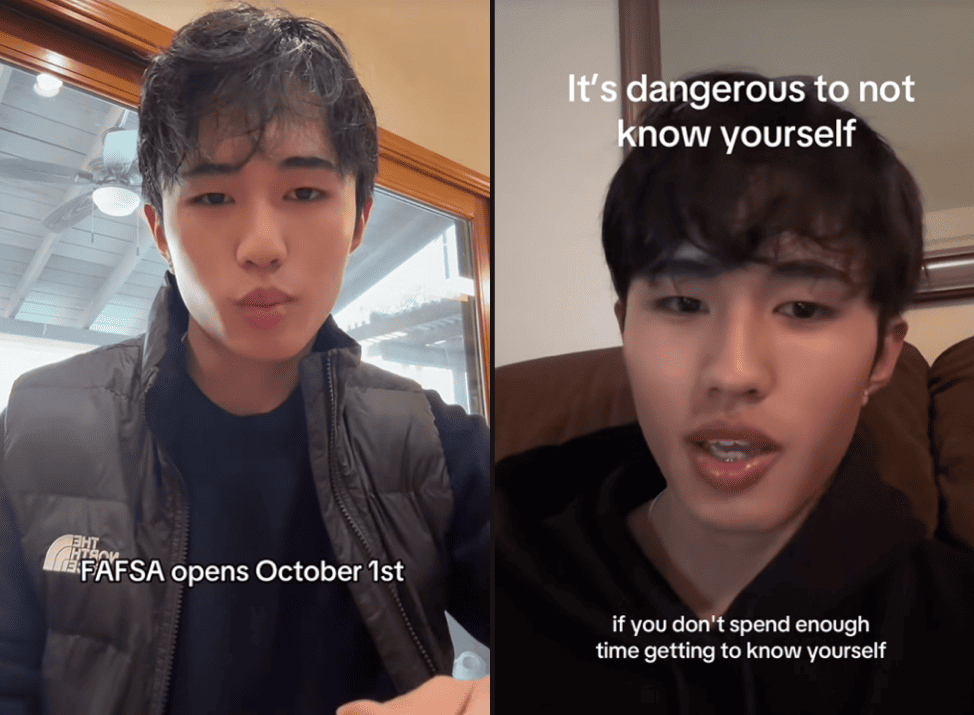
Before this, he was already active in the short-form app world as a Cluely ambassador. It feels less like a coincidence and more like someone who truly understands how to turn creator content into products from the inside.
The launch
His first launch was a “find the impostor” party game.
Released in December 2025, ImposterAI reached 20K downloads and ~$10K in revenue last month.
The app seems to have emerged from a creator account Tomi ran with friends, @tappedinclub, on both TikTok and Instagram.
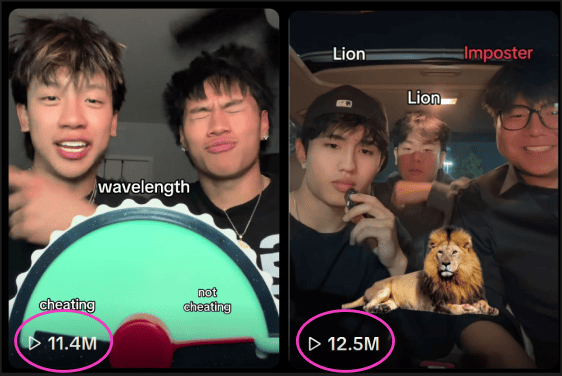
The concept was simple: a group of friends in a car, a category on screen, and one hidden impostor in the group. The format is instantly understandable, which is exactly why it works so well.
They started uploading in January 2025, and went on to generate 114M views on TikTok and 44.3M on Instagram. After months of going viral by playing the game together, they turned the mechanic into a product so viewers could do the same with their own friends.
Then, they launched separate app accounts under the @imposterai handle on both platforms. Those accounts kept using the same content style, often re-sharing material tied to the original format, but now with the app logo added at the beginning of the video.
No hard sell. No heavy explanation. Only a slightly more productized version of something viewers already understood.
That account alone pulled 15M views on Instagram.
This is the core mindset behind the strategy: build around a game that people naturally want to recreate with friends, and the content starts converting the product almost by itself.
So he did it again
The mechanic is a bit harder to explain than the impostor game, but it works great in short-form content. You see the two extremes, follow the clue, and naturally want to see if the guess lands in the right spot.
Once again, the format went viral before the app even launched.
Except this time, he didn’t create it.
The mechanic is a bit harder to explain than the impostor game, but it works great in short-form content. You see the two extremes, follow the clue, and naturally want to see if the guess lands in the right spot.
Once again, the format went viral before the app even launched.
Except this time, he didn’t create it.
This format took off through other creator accounts like @risingyakult, which generated 84M TikTok views and 51M Instagram views.
They built their audience around “wavelength” videos: a wheel, two opposite options, a hidden target, and the fun of watching people argue their way toward the right answer.
And many other accounts followed.
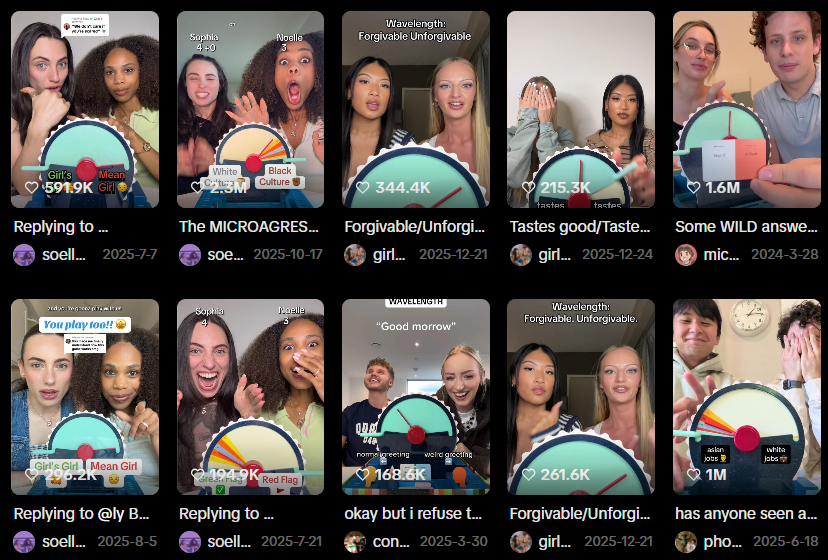
Just like with the first launch, a separate app account began posting around the same mechanic, using the same logo-first distribution trick. One standalone launch video introducing the app pulled 580K views.
Even as the faces changed, the playbook stayed the same: make a social format go viral first, then turn it into an app.
It works even better because these mechanics are naturally social, so viewers start thinking about who they would play with.
In the end, it does not matter if you create the format or spot it early. The revenue goes to whoever moves fastest to the App Store and turns the viral idea into a dead-simple, highly usable product.
Leave a Reply