Dating and Relationship apps aren’t trying to be everything anymore. They’re going hyper-niche, built for specific intents, identities, life stages, and relationship dynamics. Each new app is filling a gap that the broader platforms never solved.
This guide was built for app founders, marketers, and growth teams in the Dating & Relationships space using TikTok or any other short-form content platforms to drive organic growth.
Everything inside is designed to be used immediately. You can pull proven hooks, apply repeatable formats, and shape a content strategy based on what’s currently working in this niche.
Use it to build a content system that’s designed for scale.
What Drove Growth in the Dating & Relationship Niche
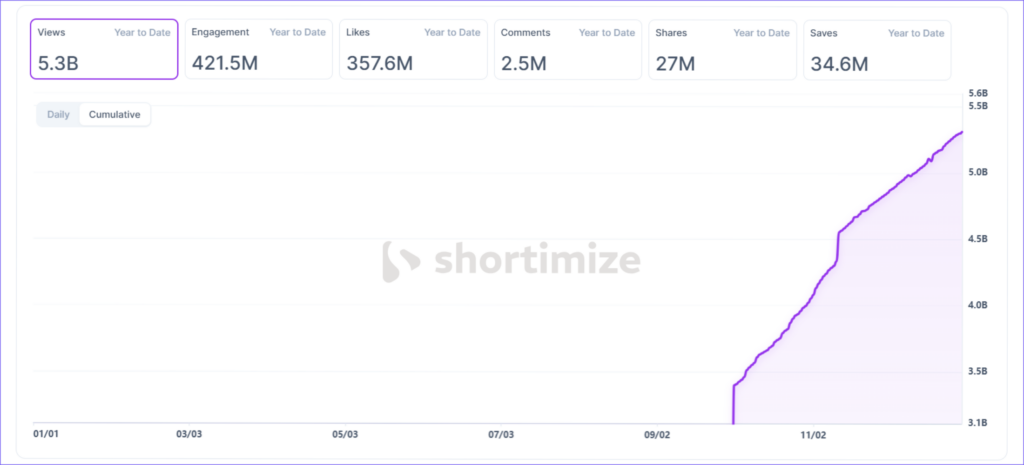
Over the last four years, Dating and Relationship content has crossed 5.3 billion total views and generated more than 426.1 million in engagement. What’s more interesting is when that growth happened.
In the past year alone, the category jumped from under 1 billion views and sub-100 million in engagement to its highest-performing period yet.
The audience demand for dating and relationship content is expanding faster than the supply of good content.
This growth is being driven by apps and creators that understand how to package emotions like loneliness, validation, humor, and fantasy into formats TikTok can distribute at scale. The upside is obvious: when distribution and content align, this niche explodes.
The Hook Pattern That Won the Niche
Comparison-based hooks outperform every other pattern, averaging 1.5M views. These hooks work by placing two situations or outcomes side by side, pushing viewers to immediately relate and choose.
This framing fits naturally with how people think about dating, comparing options, outcomes, and experiences. Variations like before vs after, this type of relationship vs that one, or what happens if you choose A instead of B consistently stop the scroll.
Other hook patterns, “Call-Outs”, “Contrarian Takes”, and “Curiosity” driven openers also perform well, but comparison remains the most reliable at scale.
Best-Performing Emotional Hook Angle
Anger is the top-performing emotional angle, followed by comfort, curiosity, fear, and hope.
Anger creates instant recognition and emotional pull, as frustration is a shared experience in dating. After all, who hasn’t been ghosted, received mixed signals or had unmet expectations?
Comfort and hope perform well by offering reassurance and the promise of better outcomes, while curiosity and fear tap into uncertainty and personal what-ifs.
These emotions reflect the real dating experience, which is why content built around them consistently earns attention and engagement.
Hook Length Is Flexible in This Niche
When it comes to hook length, short, medium, and long hooks all perform well. No single length dominates.
This suggests that performance here is driven less by hook length and more by framing, emotion, and context.
You have room to experiment, whether that’s a sharp one-liner, a short setup, or a slightly longer scenario, without being penalized by the algorithm.
For dating apps, this flexibility makes it easier to test different storytelling styles while staying within proven patterns.
Which Format Worked Well
Both face and faceless formats generate strong views. Showing up on camera isn’t a requirement for success.
Face-led content does see a slight edge in views, likely because it adds emotional clarity and relatability. Still, faceless formats remain highly effective for scale and consistency.
Longer Videos Boost Engagement
When looking at performance by duration, longer videos (30+ seconds) generate the highest views and engagement in the Dating and Relationship niche. They allow space for storytelling, emotional buildup, and payoff.
That said, shorter videos (0–20 seconds) are still the most common in volume, likely because they’re faster to produce and easier to test.
This shows that while short clips dominate in quantity, longer narratives are better at driving meaningful engagement.
For a deeper look, explore our full analysis below:
Top-Performing Hooks from Leading Apps
Below is a list of 500 high-performing hooks from the Dating and Relationship niche. Each hook includes its view count, engagement rate, hook pattern, and emotional angle, so you can see not just what worked, but why it worked.
These hooks reflect the same patterns covered earlier: comparison, call-outs, curiosity, and emotional framing, applied across different contexts and audiences.
If you want a broader reference set, we’ve also included a downloadable XLSX file with 6,000+ hooks, collected from more than 15 top-performing dating and relationship apps.
This dataset was built for filtering, remixing, and testing at scale.
25+ Content Formats That Worked for Dating & Relationship Apps
Below are easy-to-use content formats that consistently work in this niche. They’re simple to create, flexible across audiences, and don’t require heavy production.
Each format can be adapted to different hooks, emotional angles, and app positioning.
Pick one, apply a hook from the previous section, and start testing.
1. Camera Zoom + Hook
The video opens with a short hook on screen, followed by subtle zoom-in and zoom-out shots using the front camera while the creator reacts or vibes to the audio. The movement keeps the video visually engaging without distracting from the hook.
2. Street Dating Question
A short, direct dating question is asked to people on the street. There’s no upfront hook, and the video stays short. Very short but highly engaging.
3. Front Camera Pose
The creator reacts to a hook (e.g., “We found our perfect match on XYZ app”) while friends dance in the background. It blends personal relatability with social proof, showing the app works for others and making the story feel authentic and relatable to the audience.
4. Question Slideshows
A faceless slideshow with a short, engaging hook (e.g., “Spicy question for couples”) set over romantic visuals. It taps into curiosity and emotional connection.
5. Phone Demo + Couple
Show the phone screen to demo the app, then transition to a couple enjoying a moment together. It combines product demonstration with emotional payoff, showing how the app works and the real-life results it can create.
6. Driving + Story Hook
A long hook tells a cheating or breakup story while one person drives and the other records them with the front camera. It uses storytelling and relatability to pull viewers in, while the POV style makes the scenario feel personal and immersive.
7. Hospital Story
A person is shown lying in a hospital bed or getting treatment, paired with a hook, often related to cheating or relationship drama. It uses dramatic storytelling and suspense, instantly grabbing attention and making viewers curious.
8. Zoom Call Format
Show a team meeting or group call with a fun, relatable, or slightly controversial conversation happening. It’s relatable and casual, giving viewers a peek behind the scenes while making the content feel natural and engaging.
9. Forehead + Typing
A close-up of someone’s forehead with a typing sound in the background, paired with a short, engaging hook. The unusual visuals and sound immediately stop the scroll.
10. Lip Sync + App Moment
The creator lip-syncs to a song with emotional expression, then shows the app in use. It blends emotion with product demonstration, making the content relatable while highlighting how the app works.
11. Couple Handshake
A boyfriend and girlfriend gesture with a handshake to show agreement or disagreement on a topic or situation. It’s simple, relatable, and visually clear, quickly communicating dynamics or opinions in a way viewers can relate to.
12. Street Interviews
One person asks interesting questions to strangers using a mic, capturing their spontaneous responses. It taps into curiosity and relatability, letting viewers connect with real reactions and unexpected answers.
13. Walking Story
A person walks while talking to the camera, explaining a dating or relationship story. The movement keeps the video dynamic, while the casual delivery makes the story feel natural and easy to follow.
14. City Walk Slideshow
A slideshow of someone walking or posing against an attractive city backdrop, paired with a short hook. It adds local relevance and visual appeal, helping city-specific accounts feel aspirational and relatable at the same time.
15. Mirror Selfie Slideshow
A slideshow built around mirror selfies, paired with a hook. It’s often used for tips, dating locations, or quick lists. It’s easy to create and highly adaptable, while the mirror selfie adds a personal touch.
16. Move Night Theme
A dim, cozy movie-night setup with soft lighting, blankets, and a screen glow in the background, often filmed faceless to keep the focus on the vibe rather than the people. This simple format feels intimate and highly relatable.
17. Wind-in-Face Storytelling
Record with wind hitting their face while delivering a long, curiosity-driven hook. This can be done while driving, walking, riding, or in any situation where natural movement adds energy. The motion keeps attention high, while the longer hook builds intrigue and encourages viewers to stay for the payoff.
18. Best Friends Vibe
Two best friends dance and vibe to a song on the street, paired with a hook or caption related to friendship and dating. It taps into friendship dynamics and relatability, making the content feel fun, social, and easy to connect with.
19. Coffee Shop Moment
The video is shot in a coffee shop and paired with a dating or relationship hook. It can be used on its own or combined with other formats. Coffee shops feel casual and relatable, making the content easy to remix while fitting naturally into dating and relationship scenarios.
20. Disappointing Reveal
React with visible disappointment after discovering something, then show the phone screen, chat, notification, or a screenshot to reveal what caused it. The emotional reaction creates instant curiosity, while the reveal keeps viewers watching to understand the context.
21. Fast-Paced Explainer
A person explains a topic while the video moves quickly, paired with a long hook on screen. The speed creates urgency, pushing viewers to focus on the hook and stay engaged to keep up.
22. Solid Color Question Slideshows
A solid color background opens with a hook like “5 uncomfortable questions,” followed by slides that reveal each question. It’s highly flexible and easy to remix with tips, lists, or location-based content.
23. Gradient/Design Background Slideshows
A faceless slideshow with a designed or animated background (like gradients), paired with a hook and sequential content, similar to the solid color slides. The subtle motion or design keeps attention while delivering information, making it visually engaging.
24. Cartoon Couple Slideshow
A faceless slideshow featuring a cartoon couple paired with a short, spicy hook. It’s flexible and visually playful, letting creators deliver stories, tips, or scenarios without showing real people, while keeping viewers engaged.
25. Ocean/Nature Backdrop
A hook is paired with a natural background, often with waves, ocean, or pretty skies, and slides or visuals related to dating or relationship content. The natural setting creates a calm, visually appealing vibe, making content easy to watch and versatile across different dating contexts.
26. First Date vs Now
A simple side-by-side contrast showing awkward, shy first-date behavior versus fully comfortable, playful “now” energy. The quick transformation is instantly relatable, easy to understand without context, and sparks comments from couples who see themselves in it.
27. Back View Subway
A faceless slideshow or video showing a person from behind in a subway, paired with a hook. Ideal for metropolitan dating or relationship contexts. It gives a city vibe and anonymity, making it easy to relate while keeping the focus on the hook and context.
28. Dual Phone Demo
Two phones are shown side by side, demonstrating how couples interact with or use the app. It clearly shows functionality and interaction, helping viewers visualize real-life usage.
For more ideas, check out our 50+ faceless formats guide. It will give you even more flexibility to produce content quickly and consistently for the Dating and Relationship niche.
Emerging Trends & Untapped Opportunities
The trends and opportunities that can help you get traction in this competitive niche:
Hyper-Situational Content
Hooks tied to clear moments (breakups, cheating, loneliness, moving cities, rebound phases) consistently outperform generic dating advice. People engage more when they instantly recognize where they are emotionally.
Comparison Hooks
Already the top-performing hook pattern, but most apps only use it in limited ways. Expand comparisons beyond “single vs taken” into mindset shifts, expectations vs reality, or before/after moments for an easy win.
Anger Leading to Comfort or Hope
Top-performing content often starts with frustration or disbelief, then resolves with validation, humor, or reassurance. This emotional sequence drives the most engagement.
Long Hooks Paired With Simple Visuals
Hook length data shows flexibility, but longer hooks perform especially well when combined with low-effort formats like slideshows, walking shots, or faceless backgrounds.
Viewers are willing to read if the payoff feels worth it.
Faceless Formats With the Right Context
While faceless content often converts lower on its own, the data shows it can still generate strong reach and engagement when paired with clear context and strong hooks.
It remains a viable option, especially for testing, volume, and early-stage distribution.
The Next 30 Days: Your Content Plan
To drive real results, you need a simple execution loop, one that helps you test fast, learn quickly, and scale.
We recommend running a simple 30-day testing loop, focused on consistent output and structured testing:
- Weekly cadence: Publish 4–6 videos per week using different hooks + format combinations.
- Hook rotation: Reuse the same format with multiple hooks before switching formats. Hooks usually fail or win faster than formats.
- Testing volume: Aim to test each hook or format at least 5–10 times before making decisions.
- Early metrics to watch: Views, average watch time, and retention.
- Later metrics to optimize: Comments, saves, shares, profile visits, and downloads.
- Doubling down: Once a hook or format shows above-average retention, remix it into new formats.
For the exact 30-day breakdown (daily actions, weekly goals, testing framework, and scaling playbook), go to our 30-Day TikTok Plan Calendar.
How We Collected the Data
The insights in this guide are based on analysis of hundreds of thousands of videos by top-performing Dating and Relationships apps across TikTok, Instagram Reels, and YouTube Shorts.
While our historical dataset goes back to 2022, the majority of patterns, hooks, and formats highlighted here come from recent performance data (2025 onward) to reflect current platform behavior.
We combined our own AI-driven analysis with manual review to ensure quality and context, and used Shortimize to track accounts and extract detailed performance metrics across platforms.
About SGE
We’re a research-led growth hub for consumer apps. We focus on understanding short-form content distribution and how it actually drives retention and downloads.
Our work is built on real-time performance data. Inside our library, you’ll find niche deep dives, growth frameworks, UGC and ambassador breakdowns, format analysis, and case studies pulled from top-performing apps.
If you want ongoing insights, ready-to-use templates, and weekly breakdowns of what’s shaping consumer app growth, explore our resources. You can also follow us on X and LinkedIn or subscribe to our newsletter.
Leave a Reply