TikTok didn’t slow down in 2025. It became louder, faster, and even more competitive for consumer apps trying to get noticed. With over 1.59 billion active users worldwide and almost 60% of them being Gen Z, it’s still the most powerful discovery engine for new apps on the planet.
This year, our team at Social Growth Engineers went all in. We tracked and analyzed thousands of videos from consumer apps, app marketers, and indie founders to understand what truly worked in 2025. Which trends sparked downloads. Which hooks made people stop scrolling. Which formats drove engagement and built real communities.
We turned that research into this report. Inside, you’ll find what made certain apps explode this year, what lessons to take from the best performers, and how to use these insights to shape your 2026 TikTok strategy.
2025 in Numbers: The State of Consumer Apps
Before jumping into the numbers, it’s worth understanding where all this data comes from. Every app we analyzed has been active across multiple short-form platforms, having a wide network of accounts, and their marketing doesn’t live in one place.
The stats you’ll see represent how these brands showed up mostly organically across TikTok, Instagram Reels, YouTube Shorts, UGC creators, brand ambassadors, and even founders’ own profiles.
Still, TikTok remains the biggest driver of traction and discovery, no surprise there, given how dominant it’s become for consumer apps.
Most analyzed apps weren’t the decade-old giants of the industry but newer apps that managed to stand out through smart positioning and authentic storytelling.
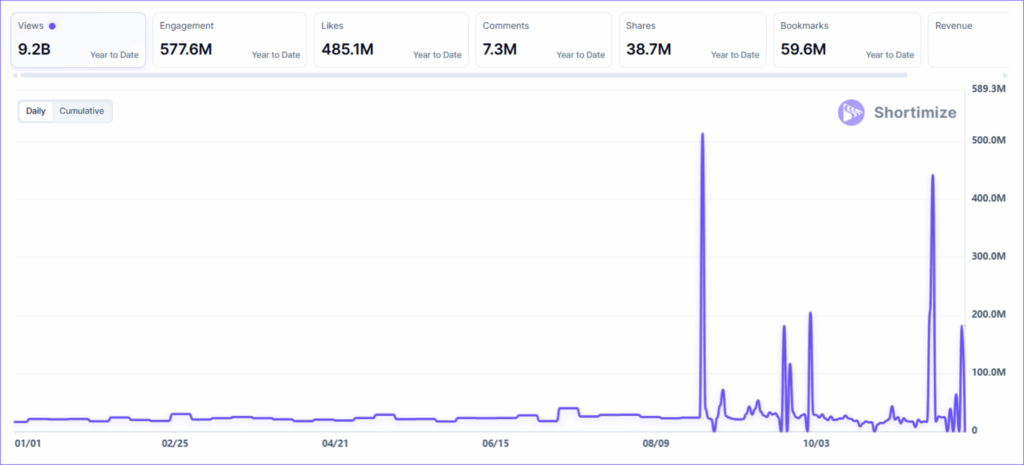
The Big Picture
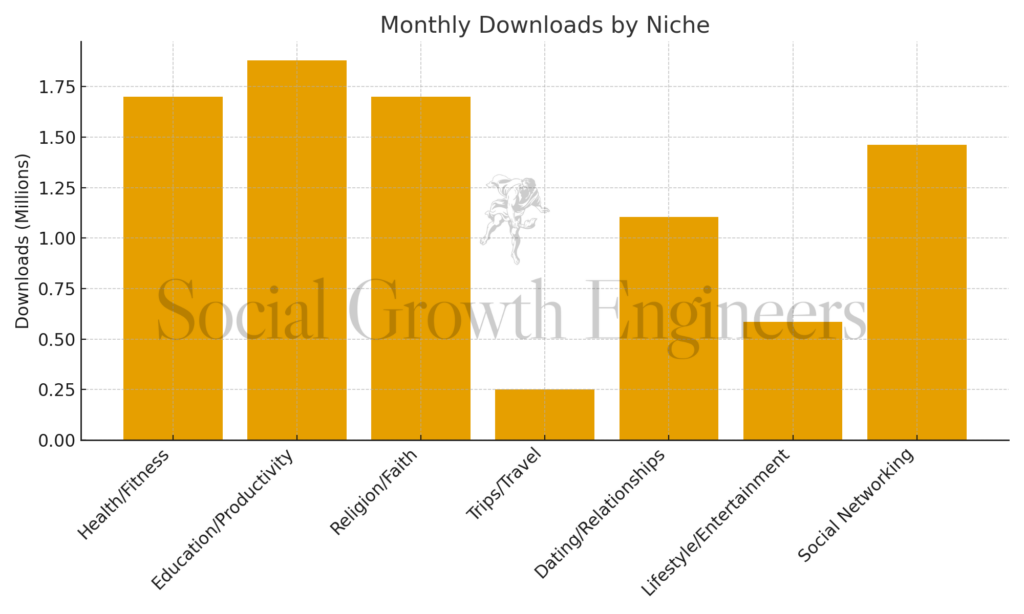
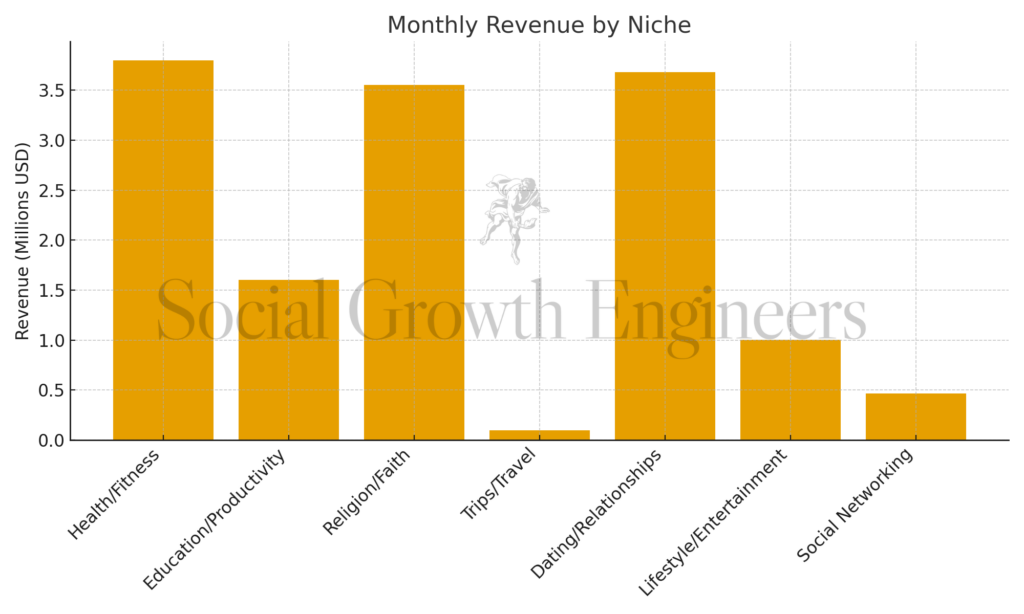
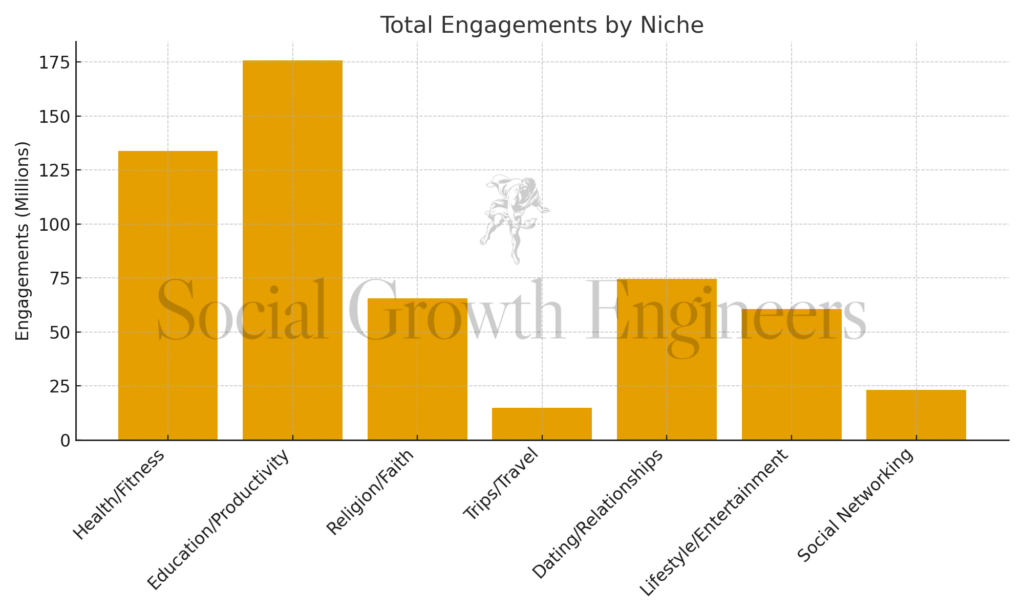
Here’s a quick snapshot of how each niche performed overall. These charts show total downloads, revenue, engagement, and views so you can get a clear sense of the broader trends before we move forward.
Downloads
This chart highlights which niches attracted the most new users every month. Education and Productivity took the lead, followed by Health, Fitness, & Well-being and Religion & Faith. On the other end, Trips & Travel saw comparatively lower download volume, reflecting a slower pace of new user acquisition.
Revenue
Here you’ll see how much money each niche generated. Health, Fitness, & Well-being topped the revenue charts, with Dating & Relationships close behind. Religion & Faith rounded out the top three, making these the most profitable niches overall.
Engagement
This chart shows which niches kept users the most active. Education & Productivity led in total engagement, followed closely by Health, Fitness, & Well-being. These niches didn’t just attract users; they kept them watching, commenting, and sharing.
Views
This final chart compares overall view volume. Health, Fitness, & Well-being generated the highest number of views, with Education & Productivity right behind it. These two niches dominated attention throughout the year.

Which Format Worked Best?
After analyzing thousands of top-performing videos across all niches, one takeaway was clear: faceless content had a slight overall edge.
On average, faceless videos reached 1.5M mean views, while face-led videos averaged 1.3M. The gap isn’t huge, but it’s consistent, especially when paired with engagement.
Across the board, faceless videos also delivered stronger engagement per 1,000 views.
This suggests two things:
- Viewers find faceless formats easier to consume and share, and
- These formats blend more naturally into the For You feed, where quick, low-friction storytelling wins.
This aligns with broader platform behavior: simple formats like slideshows, B-roll + text overlays, avatar-led videos, screen recordings, and story-based edits scale faster because they’re easy to produce, easy to test, and easy to replicate.
Check out the 50 faceless formats with prompts.
Duration Analysis:
What Video Length Worked Best?
When we broke down performance by duration, one pattern stood out across the entire dataset:
Medium-length videos (20–40 seconds) were the clear winners.
On average, these videos pulled in 2.0 million views with a strong 4.06% engagement rate, outperforming both short snappy clips and long-form storytime content.
This sweet spot hits the perfect balance, long enough to build tension, deliver value, or tell a mini-story, but short enough to keep retention high.
Why this works so well for consumer apps:
- More time to develop a hook → creators can layer intrigue, context, or data without losing momentum.
- Better storytelling flow → especially useful for formats like comparison, testimonial, POV, or breakdown-style videos.
- Stronger algorithm fit → TikTok pushes videos with steady watch time and clean drop-off curves, which 20–40 second videos often deliver.
- Perfect for multi-part edits → especially in faceless formats, where creators blend B-roll, screenshots, subtitles, and transitions.
Short videos (under 10 seconds) still spiked in some niches when paired with punchy hooks, and long videos worked well for emotional formats, but medium length was the most reliable, scalable duration across consumer apps.
We’ve also included a detailed breakdown by niche below, showing where shorter or longer formats spiked based on hook style and audience behavior.
Health, Fitness, & Well-being Niche
The Health, Fitness, and Well-being category saw a fresh wave of creativity in 2025. We analyzed a selected set of apps, mostly emerging players and bootstrapped teams, to understand what drove organic visibility and traction this year.
There’s a massive organic footprint in this niche. Founders and marketers are mastering the art of “people-first content,” creating stories their audience can actually relate to and see themselves in.
Check the data below to see how the Health, Fitness, & Well-being performed in 2025, and explore the full collection for individual app results.
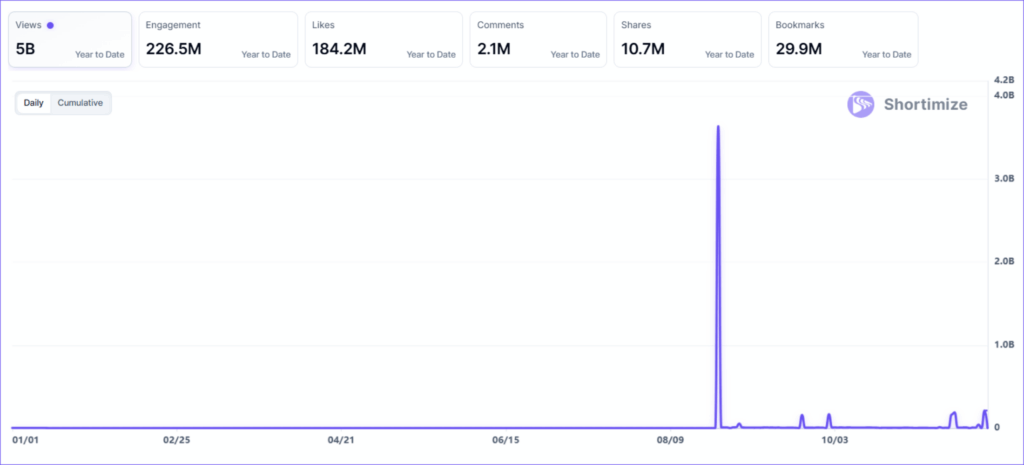
Top Performers:
Let’s look at how the standout apps performed and what their content tells us about user interest and behavior this year.
Fit With Coco
Fit With Coco (a founder-led account) turned fitness coaching into a full-on viral movement in 2025. With nearly 950 million views and 16.7 million engagements, Coco proved that consistency really does pay off.
She posted every single day, four times a day for over three years, sometimes even hitting ten posts daily. Her short, motivating videos with hooks like “Workout with me” or “Obsessed with strength training” kept people coming back for more. Her mix of discipline, energy, and authenticity made Fit With Coco one of the biggest organic success stories of the year.
Check out the full breakdown here and explore the complete Fit with Coco collection.
Cal AI – Calorie Tracker
Cal AI – Calorie Tracker became one of the year’s top data-driven fitness apps, earning $2 million monthly with 600K downloads.
Its 14.2 million views came from a mix of faceless and on-camera creators and branded accounts, showing real, everyday use, scanning meals, tracking calories, and making healthy choices look effortless. Clear, credible, and community-driven, Cal AI turned tracking into a lifestyle.
Check out the full breakdown here and explore the complete Cal AI collection.
Musa Period App
This app made waves through powerful emotional storytelling. With 292.3 million views and 15.1 million engagements this year, it built a genuine movement around body positivity and menstrual health.
Mixing faceless formats like sign-holding videos with creator-led content featuring bold hooks such as “10 years of using male-designed apps”, Musa kept its message real and relatable. Backed by a strong UGC community, the brand turned personal stories into collective empowerment.
Check out the full breakdown here and explore the complete Musa Period App collection.
Liftoff & Tone AI
These two apps nailed the formula for high-energy, transformation-style TikToks. Together, they pulled in more than 820 million views, with Liftoff hitting 396 million and Tone AI reaching 426.2 million.
Both leaned into quick, comparison-style storytelling packed with gym visuals that made fitness feel competitive and fun.
Liftoff:
The app focused on clips highlighting real app usage, with mostly using a short hook.
Check out the complete Liftoff collection.
Tone AI:
While Tone AI mixed things up with slideshows, workout videos, and A/B-style comparisons.
Their creative blend of formats turned gym routines into viral, visually charged moments.
Check out the full breakdown here and explore the complete Tone AI collection.
Copia (Now Era)
Copia (now Era) started as a manifestation app but quickly grew into something bigger, a full stress- and sleep-tracking brand built on calm, connection, and creativity.
With 46.2 million views, it may not top the charts, but its strong engagement shows a deeply loyal niche audience. The founder, who now runs multiple creator accounts, turned her brand into a growing creator network.
Mixing ASMR-style visuals, face-led videos, and slideshow formats, she built a soothing yet scalable presence that perfectly captures the softer side of the wellness space.
Check out the full breakdown here and explore the complete Copia collection.
ReciMe
ReciMe became the go-to spot for quick, aesthetic meal ideas, earning $1 million in monthly revenue, 700K downloads, and over 113.2 million views this year.
What set it apart was how people didn’t just watch the recipes, they saved, shared, and recreated them. With faceless formats, catchy short hooks, and visually satisfying cooking videos, ReciMe cracked the code for turning simple recipes into high-engagement content that everyone wanted to try.
Check out the complete ReciMe collection.
Innertune Affirmations
Innertune Affirmations was one of 2025’s surprise viral hits, racking up 156.3 million views and 22.9 million engagements.
By turning daily affirmations into shareable soundbites, the app proved that simple, consistent messaging can beat complexity. Its faceless videos, eye-catching thumbnails, and short, snappy hooks made content instantly scroll-stopping and highly shareable.
Check out the full breakdown here and explore the complete Innertune Affirmations collection.
5D Waves, Death Clock AI, and Cal Scan
These smaller apps proved that even modest-budget teams can generate massive organic reach when content taps into curiosity. Despite lower revenue and downloads, each app hit multi-million view counts.
Death Clock AI:
Death Clock AI grabbed 7.6 million views by repurposing famous podcasts into cropped, concept-driven videos that went viral for their shock factor.
Check out the full breakdown here and explore the complete Death Clock AI collection.
5D Waves:
5D Waves leaned on illustrations, remaining entirely faceless, and reached 7.6 million views. Check out the full breakdown here and explore the complete 5D Waves collection.
Cal Scan:
Meanwhile, Cal Scan kept it simple yet brilliant, using neat food comparisons to show the app in action, all without showing faces, demonstrating that clever, focused content can punch well above its weight.
Check out the full breakdown here and explore the complete Cal Scan collection.
Education & Productivity Niche
Education and productivity apps have entered a new era. 2025 was a year of fierce competition in this space, with countless new players trying to grab Gen Z’s attention.
The content strategies were diverse; some apps leaned into humor and memes, while others doubled down on creator-led storytelling or faceless, data-driven content. What united them all was one thing: a clear understanding that TikTok is where Gen Z learns, laughs, and levels up.
Check the data below to see how the Education & Productivity performed in 2025, and explore the full collection for individual app results.
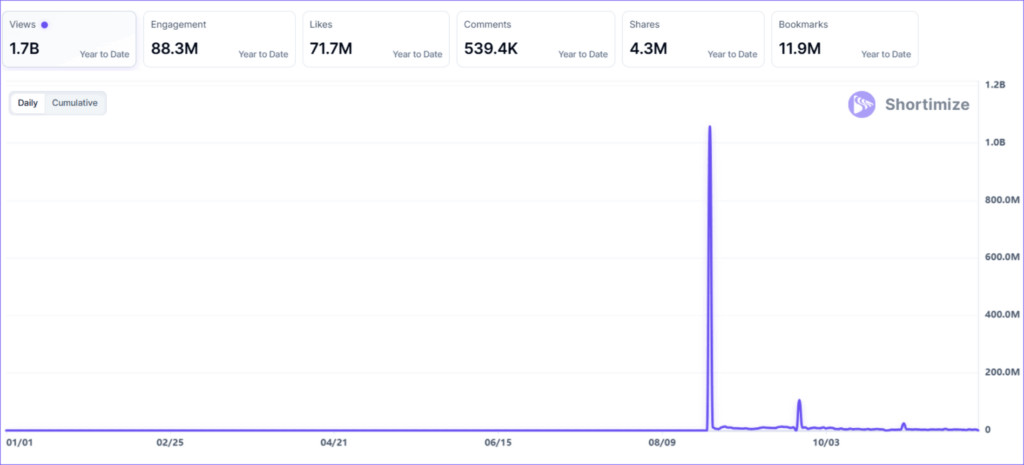
Top Performers
Let’s look at how the standout apps performed and what their content tells us about user interest and behavior this year.
Fluently
Fluently led the charge this year, pulling in nearly $200k in monthly revenue with 90k monthly downloads.
Their TikTok network hit almost 1 billion views and over 44 million engagements by mixing educational and meme-style content that felt native to the platform. Instead of sounding like a brand, they spoke Gen Z’s language, humor, simplicity, and authenticity.
Check out the full breakdown here and explore the complete Fluently collection.
Turbo Learn
Turbo Learn followed closely with $400k in monthly revenue and 300k monthly downloads.
Their viral hooks like “My Harvard professor showed me this” became a format in itself, replicated across hundreds of ambassador accounts. The combination of intellectual curiosity and trend-driven edits gave their content a massive organic push.
Check out the full breakdown here, their hook data set, and explore the complete Turbo Learn collection.
StudyFetch
StudyFetch stood out for its ambassador network, a massive web of creators operating across TikTok and Instagram.
Together, they drove 547.5 million views and 39 million engagements, helping the brand maintain consistent visibility without relying on a single “hero” creator.
Check out the full breakdown here and explore the complete StudyFetch collection.
Knowunity: AI Study Tutor
Knowunity another fascinating case. With a global content strategy that included region-specific creators and localized content, they reached 253.9 million views and 30 million engagements.
Their approach proves that personalization isn’t just about AI, it’s about understanding culture, language, and how students actually consume content in different parts of the world.
Check out the full breakdown here and explore the complete Knowunity collection.
Brainly
Brainly, a more established name, made a solid comeback by rethinking its hooks and formats.
Their shock-and-surprise approach (“Wait, you didn’t know this?” type of content) helped them maintain steady traction, with 37.7 million views and 3.4 million engagements.
Check out the full breakdown here and explore the complete Brainly collection.
Studley AI and Raena AI
Both Apps doubled down on ambassador-heavy strategies.
Studley AI:
Studley AI built a massive army of nearly 100 accounts, relying on sheer posting volume and consistent content spin-offs to dominate the “StudyTok” space.
Check out the full breakdown here and explore the complete Studley collection.
Raena AI:
Raena AI, meanwhile, tapped into affiliate and ambassador programs to drive 44.8 million views and 5.6 million engagements, proving smaller apps can compete with reach when the network effect is strong.
Check out the full breakdown here and explore the complete Raena collection.
Lingo Looper and Einstein AI
Both experimented creatively, using avatars, gamified storytelling, and conversational hooks to attract their Gen Z audience. Their campaigns delivered millions of views, proving once again that relatability often beats production value.
LingoLooper:
Lingo Looper is making $40K in monthly revenue and pulling over 50M views, all driven by avatar-led, gamified content and a tight creator network.
Check out the full breakdown here and explore the complete Lingo Looper collection.
Einstein AI:
On the other hand, Einstein AI is making $5K in monthly revenue and has pulled over 19M views with UGC content targeting Gen Z students using catchy hooks like “What’s your GPA?”.
Check out the full breakdown here and explore the complete Einstein AI collection.
Focus Flight
And finally, Focus Flight found its edge through community-led virality. Their branded hashtag challenge, #focusflightchallenge, invited users to create their own spin on productivity clips.
Helping the app gain 18.2 million views and 1.8 million engagements, mostly from user-generated content.
Check out the full breakdown here and explore the complete Focus Flight collection.
Religion and Faith Niche
The religion and faith niche is seeing an incredible wave of innovation. Besides a huge stock of existing apps, more apps are entering the market, each trying to connect with audiences in meaningful ways.
What’s really cool is how Christian-focused apps, the whole ChristianTok wave, are basically running the show on short-form right now. Their hooks hit you in the feels, the stories feel super personal, and the audience isn’t just tapping like. They’re taking action.
The creators understand something powerful: faith content works best when it feels human, not promotional. They use storytelling, emotion, and simple calls to action that inspire viewers to download, reflect, or pray right away.
Majority of traction still came from TikTok, where religious storytelling continues to outperform every other platform.
We pulled together a full collection of hooks from the top-performing ChristianTok apps and their reels, check out the Hooks Collection here.
Check the data below to see how the Religion and Faith performed in 2025, and explore the full collection for individual app results.
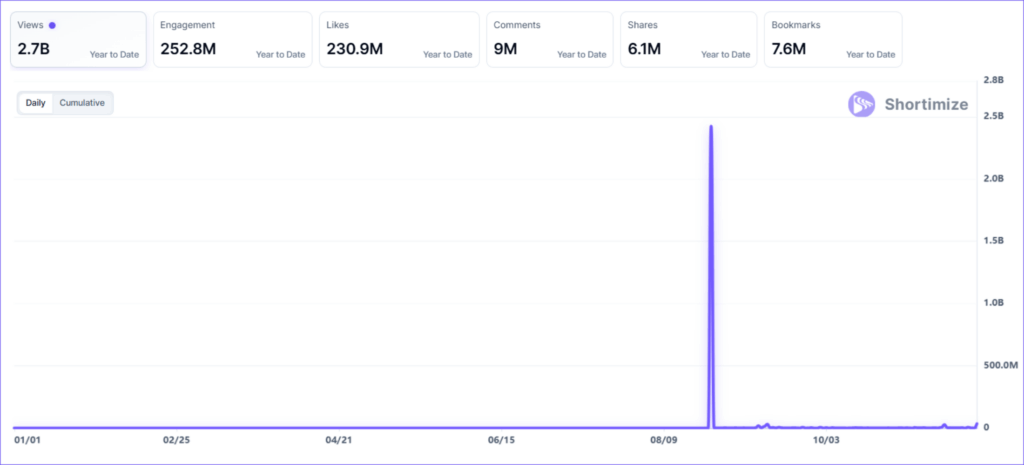
Top Performers
Let’s look at how the standout apps performed and what their content tells us about user interest and behavior this year.
Bible Chat: Daily Devotional
Bible Chat: Daily Devotional took the spotlight this year. With over $2 million in monthly revenue and 1 million monthly downloads, it’s one of the most successful apps in this niche.
Their marketing generated 55.4 million views and 4.7 million engagements across platforms. The key? A scalable creator network paired with a main account experimenting with diverse formats. Each video starts with a short, powerful hook that instantly connects with faith-based audiences.
Check out the full breakdown here and explore the complete Bible Chat collection.
Hallow: Prayer & Meditation
Hallow app followed closely, bringing in $800k in monthly revenue and 200k downloads. Their content strategy blended faceful and faceless clips, often in collaboration with ChristianTok creators.
Their videos, 84.3 million views and 3.9 million engagements, deliver a calm yet emotional tone that resonates deeply with spiritual users seeking connection and mindfulness.
Check out the full breakdown here and explore the complete Hallow: Prayer & Meditation collection.
PRAY
The PRAY app adopted a more old-school style but executed it perfectly. A faceless approach, short and strong hooks, and a consistent rhythm of posting.
Brought in 163.7 million views and 15.5 million engagements, translating into $200k in monthly revenue. They focused on simplicity, and it worked.
Check out the full breakdown here and explore the complete PRAY collection.
Prayer Project
Prayer Project is the opposite of faceless; it’s fully founder-led. The creator speaks directly to the camera, building trust through authenticity.
That direct connection earned them 44.7 million views and an insane 37.7 million engagements, with 36.3 million likes alone. The takeaway? Faith, when spoken personally, converts better than anything else.
Check out the full breakdown here and explore the complete Prayer Project collection.
Pray Screen Time – Bible Focus
Pray Screen Time took a clever angle by mixing faith with productivity. Their concept, “Pray to unlock your apps,” instantly clicked with Gen Z.
With 17.9 million views and 566.5k engagements, they proved that blending spiritual intent with modern digital habits can spark curiosity and downloads.
Check out the full breakdown here and explore the complete Pray Screen Time – Bible Focus collection.
Bible Mode: Reduce Screen Time
Bible Mode used a similar playbook but scaled it harder. They built a massive network of over two dozen accounts, running faceless, repeatable content formats.
The result? 7.5 million views, 1.8 million engagements, and $30k in monthly revenue, not bad for a format-led growth engine.
Check out the full breakdown here and explore the complete Bible Mode: Reduce Screen Time collection.
Prayer Lock: Christian Focus
Prayer Lock also leaned on faceless visuals, using gym-app-style transitions and clean, fade-in reveals.
That simple yet consistent structure generated 14.5 million views and 598.3k engagements, proving even minimal storytelling works when the message is clear.
Check out the full breakdown here and explore the complete Prayer Lock: Christian Focus collection.
Faithy: Devotional & Prayer
Faithy took risks that paid off. They built a wide ambassador network testing multiple content styles at once.
Despite the experimental approach, they hit 4.7 million views, 358.3k engagements, and $6k in monthly revenue.
Check out the full breakdown here and explore the complete Faithy: Devotional & Prayer collection.
Haven: Bible Chat and Manna:
Haven: Bible Chat
Haven leaned heavily on mass slideshow schemes, a strategy that’s quickly becoming a go-to for faith-based apps. With $400k in monthly revenue, Haven pulled in 2.2 million views.
Check out the full breakdown here and explore the complete Haven: Bible Chat collection.
Manna: Daily Bible Study
Manna used the same approach and saw even bigger traction, hitting 28.7 million views and 569k engagements.
Check out the full breakdown here and explore the complete Manna: Daily Bible Study collection.
Bible.ai
Finally, Bible.ai deserves a mention for its simplicity. The founder used the “holding a sign in public” trend, a minimal format that’s relatable, scroll-stopping, and human.
Even though the reach was smaller (193k views), the format shows how even the most low-production content can build community and trust.
Check out the full breakdown here and explore the complete Bible.ai collection.
Trips and Travel Niche
The travel niche had a surprisingly strong run this year. More apps entered the space, creators leaned in harder, and audiences responded because travel is one of those evergreen categories that never stops inspiring people.
It’s also less crowded than religion or study apps right now, which means there’s real room to carve out a breakout moment if you understand how to ride the short-form wave.
Creators in this niche mix a bunch of formats, travel aesthetics, quick destination swipes, emotional hooks, and fast “you need to try this” slideshows. But the real glue is the energy. Travel apps win when creators spark excitement, curiosity, or the itch to pack a bag.
We pulled together a full collection of hooks from the top-performing TravelTok apps and their reels, check out the Hooks Collection here.
Check the data below to see how the Trips and Travel performed in 2025, and explore the full collection for individual app results.
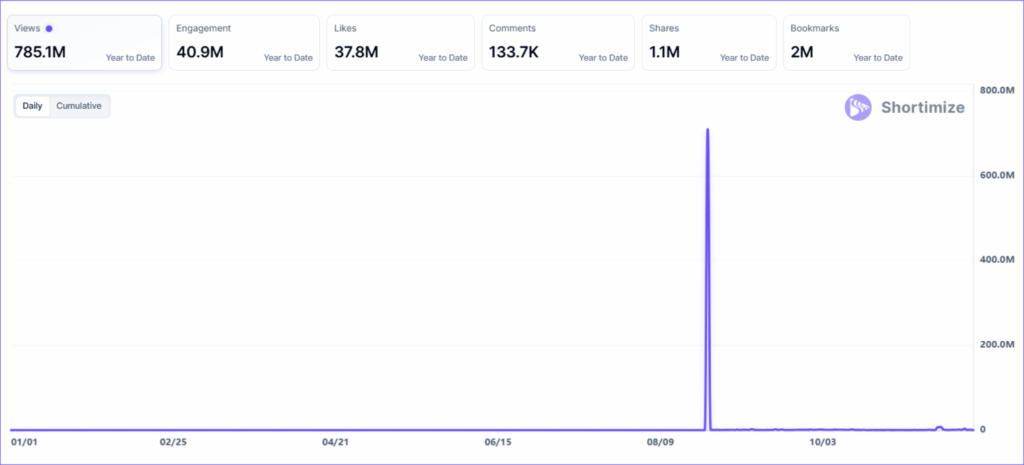
Top Performers
Let’s look at how the standout apps performed and what their content tells us about user interest and behavior this year.
Trip BFF
One of the strongest players in the niche right now. They’re doing $50k in monthly revenue with 20k+ monthly downloads.
Their marketing this year pulled in 93.5M views, 5.9M engagements, 5.7M likes, 14.5k comments, 23.6k shares, and 121.9k bookmarks. They’re running a massive ambassador network, constantly testing long and short hooks, and mixing slideshows with short videos. It’s a simple formula but it’s working consistently.
Check out the full breakdown here and explore the complete Trip BFF collection.
Going Solo: Travel Friends
A smaller but fast-rising contender. Sitting at $7k in monthly revenue and 5k+ monthly downloads, their content has earned 68.2M views, 4.3M engagements, 4.2M likes, 5.6k comments, 13.9k shares, and 78.8k bookmarks.
Their approach mirrors Trip BFF but with a more aesthetic twist, cute, calming travel clips paired with versatile hook variations.
Check out the full breakdown here and explore the complete Going Solo: Travel Friends collection.
Nomadtable
A breakout from the indie side. They’re making $30k per month and pulling 200k+ downloads consistently. Their strategy has generated 20.5M views, 585.9k engagements, 410.9k likes, 6.8k comments, 35.2k shares, and 133.1k bookmarks.
What’s interesting is the founder leading the charge through his own content, supported by a small but focused creator network. Lots of format testing, lots of hook experimentation.
Check out the full breakdown here and explore the complete Nomadtable collection.
Tryp.com
Currently at $5k monthly revenue with 20k+ downloads. Their strategy performed with 39.5M views, 4.2M engagements, 2.5M likes, 14.2k comments, 754.4k shares, and 964.6k bookmarks.
Their edge is multilingual UGC. Their ambassador network posts in multiple languages, with heavy traction coming from Europe. A strong example of localized content done well.
Check out the full breakdown here and explore the complete Tryp.com collection.
FlySafe
Another rising indie app in the space, bringing in $7k per month and 5k+ monthly downloads. Their creative output delivered 3.8M views, 215.8k engagements, 158.8k likes, 768 comments, 19.4k shares, and 36.9k bookmarks.
The app name is always visible in their posts, and they even comment with the app name to boost recognition. They’ve recently begun testing slideshows too.
Check out the full breakdown here and explore the complete FlySafe collection.
Dating and Relationships Niche
Dating and relationships had one of the most explosive years in 2025. Tons of new apps entered the niche, and the top performers made serious money.
This category has always been spicy and internet-friendly, and TikTok only amplified that. From controversial hooks to emotional storytelling to toxic ex-baiting, this niche knows how to get people watching, commenting, and downloading.
The interesting part? Their formats worked so well that creators from completely different niches started borrowing them just to boost their own views. When a niche becomes trend-setting instead of trend-following, you know something big is happening.
We pulled together a full collection of hooks from the top-performing CoupleTok apps and their reels, check out the Hooks Collection here.
Check the data below to see how the Dating and Relationships performed in 2025, and explore the full collection for individual app results.
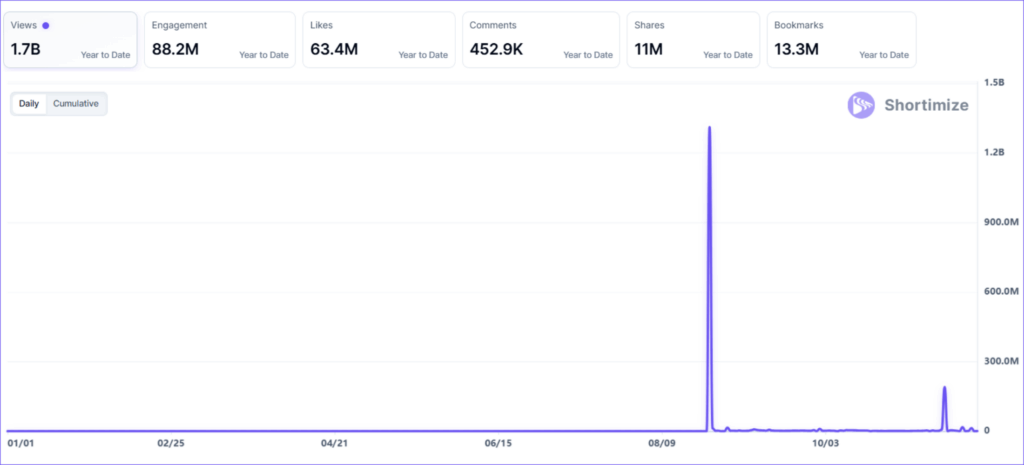
Top Performers
Let’s look at how the standout apps performed and what their content tells us about user interest and behavior this year.
Hily Dating App: Meet. Date.
A giant in the space, doing $3M per month with 200k+ downloads. They’ve leaned fully into attractive on-camera creators delivering short hooks in short videos.
Everything is face-forward and personality-driven. This formula pulled in 48.6M views, 957.3k engagements, 880.4k likes, 14.3k comments, 27.4k shares, and 36.1k bookmarks so far this year.
Check out the complete Hily Dating App collection.
Couple Joy – Relationship App
One of the strongest players in the entire category. Pulling $300k monthly revenue with 400k+ monthly downloads, they’ve built a massive faceless empire powered by slideshows and punchy hooks like Spicy Questions.
Their network has generated 231M views, 25.6M engagements, 18.9M likes, 48.8k comments, 3.7M shares, and 3M bookmarks. They are a textbook example of scaling faceless formats the right way.
Check out the full breakdown here, their hooks data set, and explore the complete Couple Joy collection.
Tea Dating Advice
Removed from the app store but worth mentioning because of the numbers they hit before that. They were doing $200k per month with 400k+ downloads, backed by a wild content engine powered by fictional stories about cheating, breakups, scandals, and dating felons.
Their network drove 290M views, 12.5M engagements, 11.4M likes, 160k comments, 518.5k shares, and 388.9k bookmarks. Their storytelling style influenced half the niche. These numbers are from when the app was live on the App Store.
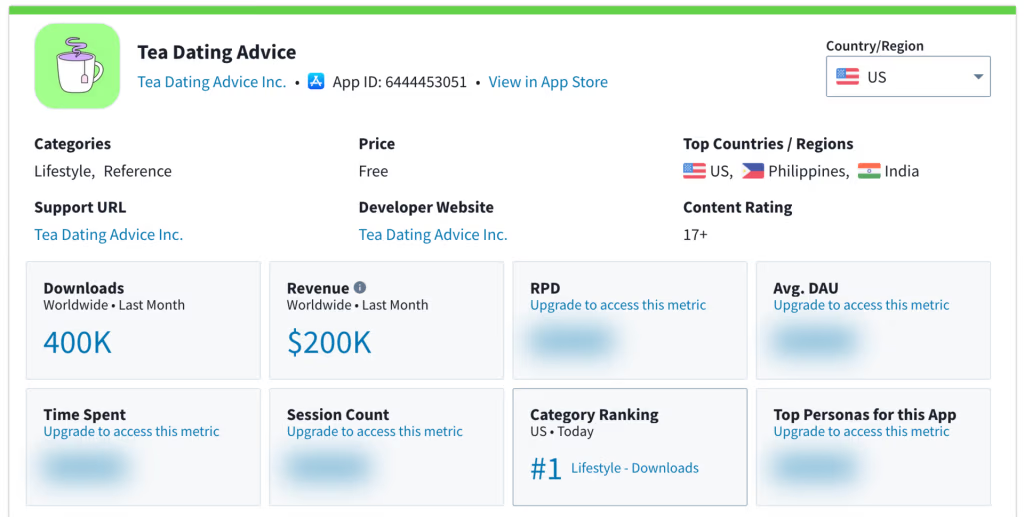
Check out the full breakdown here and explore the complete Tea Dating Advice collection.
Lox Club – Jewish Dating App
Currently making $100k monthly revenue with 5k+ downloads. What started as a joke app became a real business, thanks to consistently viral distribution across TikTok and Instagram.
Their big win came from a Zoom-meeting skit that exploded and defined their tone. They’ve racked up 53.8M views, 5.4M engagements, 4.8M likes, 25.5k comments, 314.7k shares, and 242.9k bookmarks.
Check out the full breakdown here and explore the complete Lox Club collection.
Ghosted: No Filter Dating App
Positioned strong in Europe, making $60k per month with 30k+ downloads. Most of their content is in French, mixing music-driven face videos with short, effective hooks.
Their content pulled 101.3M views, 4.2M engagements, 3.6M likes, 17.1k comments, 446.5k shares, and 153.9k bookmarks.
Check out the complete Ghosted collection.
Ember – AI Relationship Coach (Formerly Us Couples App)
A smaller but promising AI-driven entry. Doing $7k monthly revenue with 10k+ downloads, and posting 45M views, 1.1M engagements, and 1M likes.
They’re scaling through a wide ambassador network, mostly using simple chest-up headshot videos that feel intimate and personal.
Check out the full breakdown here and explore the complete Ember collection.
Cray Cray
A couple’s game app released last year and already pulling $10k per month with 30k+ downloads. They run one of the biggest faceless creator networks we’ve ever seen in consumer apps.
Their hooks, like 5 uncomfortable questions to ask your other half, consistently hit. Their reach so far: 255.8M views, 22.8M engagements, 10.6M likes, 54.7k comments, 4.8M shares, and 7.3M bookmarks.
Check out the full breakdown here and explore the complete Cray Cray collection.
Zest Couples: Games & Quizzes
Currently doing $5k monthly revenue with 30k+ downloads. Their content output generated 38.6M views, 965.7k engagements, 796.7k likes, 2.9k comments, 71.8k shares, and 95.2k bookmarks.
They run both faceless and face-based formats, faceless featuring cartoon couples with short hooks, face-based featuring longer hooks and personal storytelling.
Check out the complete Zest Couples collection.
Lifestyle and Entertainment Niche
Lifestyle and entertainment have quietly become one of the most powerful niches among Gen-Z, and soon Gen-Alpha. This category is flexible by design: you can stretch it into AI characters, astrology, disposable cameras, fashion, roleplay, romance, or even personality-based viral loops.
That range is exactly why builders love it. You’re not boxed in, and apps that would never survive in other niches can blow up here if they bring a fresh angle and a sticky USP.
The best part? The audience in this niche is naturally hyper-engaged. They love aesthetics, storytelling, identity-driven content, and anything that feels fun, expressive, or a little chaotic. If you’re targeting young users who love discovering “their next obsession,” this is the playground to build in.
Check the data below to see how the Lifestyle and Entertainment performed in 2025, and explore the full collection for individual app results.
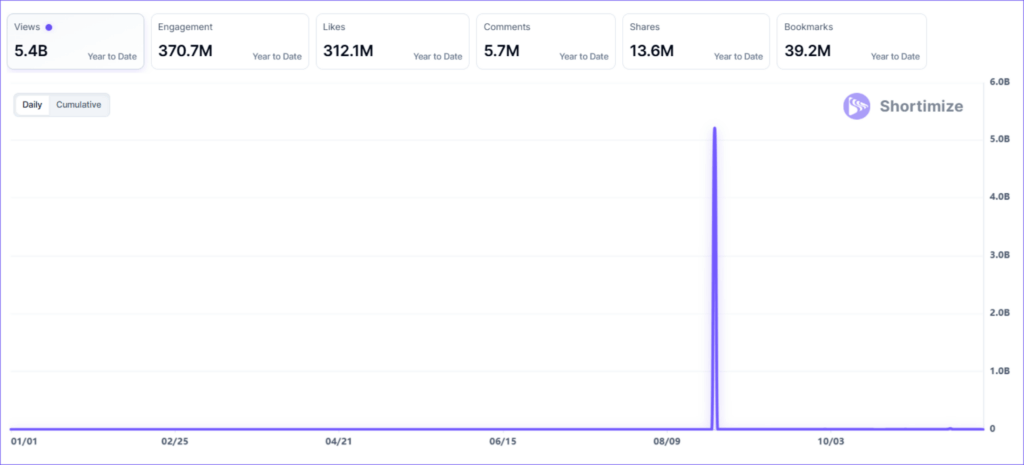
Top Performers
Let’s look at how the standout apps performed and what their content tells us about user interest and behavior this year.
Character AI: Chat, Talk, Text
A monster performer doing $600k monthly revenue with 400k+ monthly downloads. Their content engine has produced 121.6M views, 13.3M engagements, and 10.7M likes.
They cross-post the exact same videos on TikTok and Instagram, mixing faceless formats with strong hooks like AI-generated people, celebrity edits, Ghibli filters, and clean screen recordings. They’ve essentially mastered the “same video, two platforms, infinite reach” system.
Check out the full breakdown here and explore the complete Character AI collection.
Dippy – AI Characters & Roleplay
Currently pulling $10k monthly revenue with 6k+ downloads, but their distribution strategy is massive. They run over 80 accounts, making it one of the biggest faceless networks we’ve studied.
Their content has hit 88.7M views, 3.8M engagements, and 3.2M likes. Their bread and butter: A/B comparison videos at scale. It’s quantity, but done smart.
Check out the full breakdown here and explore the complete Dippy AI collection.
Starcrossed
Doing $60k monthly revenue with 5k+ downloads. This is a founder-led success story. Her simple, talking-to-camera astrology content built an audience before the product launched.
That consistency paid off: 113.9M views, 9.1M engagements, and 7M likes. t’s a reminder that sometimes, the simplest formats outperform everything.
Check out the full breakdown here and explore the complete Starcrossed collection.
Eyepic: Eye Color Camera
Currently doing $20k monthly revenue with 10k+ downloads, backed by one killer format: street interviews. Scan a stranger’s eyes → show the app in action → instant curiosity.
This alone generated 195.4M views, 4.7M engagements, and 4.2M likes. It’s a clean hybrid of social proof and product demo.
Check out the full breakdown here and explore the complete Eyepic collection.
Rizz
Pulling $200k monthly revenue with 90k+ downloads. Their faceless B-roll TikTok strategy is wild, long videos (2–5 minutes), tons of accounts, and story-driven text overlays.
Their creators insert the app name or a product screenshot inside the narrative. The result: 43.1M views, 2.6M engagements, and 2.2M likes. It’s storytelling at scale.
Check out the full breakdown here and explore the complete Rizz collection.
POV – Disposable Camera Events
Doing $100k monthly revenue with 50k+ downloads. They run a multi-account, faceless TikTok machine, and recently started testing an AI avatar narrator for a more face-forward feel.
Their numbers: 87.1M views, 6.7M engagements, and 5.2M likes. UGC accounts boosted their visibility even further.
Check out the full breakdown here and explore the complete POV Camera collection.
Astroscope: Astrology Guide
One of the biggest view-generators in the niche. Currently doing $9k monthly revenue with 5k+ downloads, but their content reach is crazy: 467.8M views, 18.4M engagements, and 14.9M likes.
Built entirely on faceless zodiac slideshows, heavy text, emotional topics, and global scaling across six new accounts.
Check out the full breakdown here and explore the complete Astroscope collection.
Closetly
Doing $5k monthly revenue with 20k+ downloads. They’ve expanded from one account to multiple ambassadors, but what sets them apart is their storytelling approach.
Every video revolves around a scenario, a crush, a night out, a moment, but always circles back to the outfit. That angle generated 40.9M views, 2M engagements, 1.7M likes, 4.8k comments, 112.4k shares, and 116.7k bookmarks.
Check out the full breakdown here and explore the complete Closetly collection.
Social Networking Niche
This niche is blowing up as Gen-Z leans heavily into TikTok-style storytelling. Social apps win when they tap into relatable moments, emotional beats, and light, scroll-stopping narratives.
The trick is simple but powerful: find a slice of Gen-Z life your app fits into, then package it as short, authentic stories. Most top performers rely on two pillars, raw UGC and tight emotional context, both of which feel organic on TikTok and IG.
Check the data below to see how the Social Networking performed in 2025, and explore the full collection for individual app results.
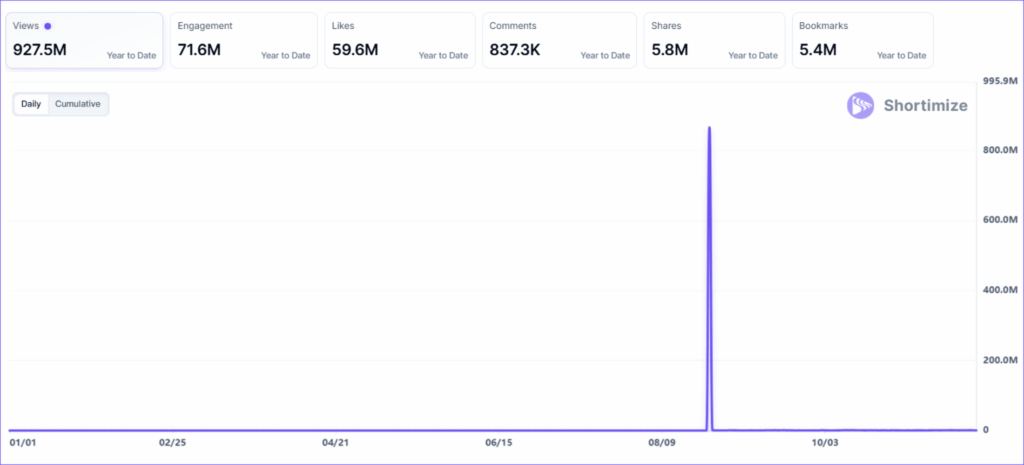
Top Performers
Let’s look at how the standout apps performed and what their content tells us about user interest and behavior this year.
Partiful
Partiful pulls in $5k MRR with 300k+ monthly downloads. Their content has driven 84.1M views this year with 6.5M engagements. Almost everything is organic, boosted by a wide ambassador network.
Their two winning formats are extremely simple: close-up selfie UGC and faceless invites, both designed to feel like friends sending you event plans.
Check out the full breakdown here and explore the complete Partiful collection.
Locket
Locket is doing $300k MRR and 800k+ monthly downloads, while hitting 161.8M views this year.
Their entire strategy is built around small creators posting the exact same video format: a face shot paired with a quick app demo. It’s predictable, and it works like magic for TikTok’s algorithm.
Check out the full breakdown here, hook data set and explore the complete Locket collection.
Daze — Freeform Chat
Daze makes $5k MRR with 20k+ monthly downloads, backed by 14.8M views.
Every piece of content is 100% faceless, following a repeatable blueprint: a screen-recorded text convo layered on b-roll. Super simple, super scalable, very Gen-Z.
Check out the full breakdown here and explore the complete Daze collection.
Ditto — Your Life in Lists
Ditto earns $5k MRR with 5k+ monthly downloads, generating 22.8M views this year. Their vibe is “iPhone Notes meets Pinterest.”
Think: clean layouts, cozy pace, and founder-led stories. They’re hitting Gen-Z perfectly by repeating the same storyline with slight tweaks each time.4
Check out the full breakdown here and explore the complete Ditto collection.
Pengu — Virtual AI Pets
Pengu brings in $100k MRR and 300k+ monthly downloads, fueled by 51.8M views.
Their strategy is multi-format, multi-account, and powered by a giant penguin mascot (Duolingo energy). Cute moments + memes = endless virality.
Check out the full breakdown here and explore the complete Pengu collection.
SUSH — Virtual Pet Grow & Evolve
SUSH generates $10k MRR with 30k+ monthly downloads, backed by 1M views. Their ambassador network is huge, especially on campuses.
Most creators are students, which is why the content feels native to Gen-Z rather than branded.
Check out the full breakdown here and explore the complete SUSH collection.
Status — Sim but Social Media
Status does $40k MRR with 6k+ monthly downloads, reaching 48.8M views this year.
Their playbook is pure founder content: simple videos of the founder with a text hook, reposted across multiple accounts with slight edits for each audience.
Check out the full breakdown here and explore the complete Status collection.
How Top-Performing Hooks Drove Growth Across Each Niche
Hooks are the engine behind every viral moment in this report. They decide how fast someone stops scrolling, how long they stick around, and how much they connect with an app’s story.
Across niches, the top-performing apps weren’t posting more; they were posting with logic and numbers, using hooks that lined up with their audience’s mindset and emotions.
Here, we break down the hook patterns that consistently drove views, conversions, and downloads in each niche. These insights come from the top videos we selected after reviewing thousands of posts across TikTok and Instagram.
Health, Fitness, & Well-being Hooks,
In the Health, Fitness, & Well-being niche, hook performance was surprisingly broad, with no single pattern dominating, proof that creators have a lot of flexibility here.
Still, “How to” and lightly contrarian open pulled ahead, especially when paired with short, punchy phrasing. Nostalgia emerged as the strongest emotional driver across top videos, fueling the niche’s 644.8M total views.
And while most hook characteristics performed well, formats built around direct questions or list-style opens consistently underperformed.
The full dashboard breaks down the nuances behind these trends, including hook length patterns, emotional angles, and top-performing structures.
Education & Productivity Hooks
Here, the hooks leaned heavily toward one clear winner: comparison. This single pattern dominated across top-performing videos, contributing to the niche’s 493.3M total views.
Curiosity and fear were the strongest emotional angles, consistently pulling viewers deeper into the content. Both short and medium-length hooks performed well, giving creators room to play with pacing.
Interestingly, question-based hooks, along with opens starting with “You” or “I,” proved far more effective than other characteristics. And the breakout opening phrase of the niche? “My Harvard,” which repeatedly showed up at the top of high-performing videos.
All the detailed breakdowns show up cleanly inside the full dashboard.
Religion and Faith Hooks
In the Religion and Faith niche, “How-to” hooks were the clear standout, driving a big portion of the niche’s 142.3M total views. The emotional angles that performed best were curiosity and hope, two themes that naturally fit faith-based content and consistently pulled viewers in.
Bible study topics dominated the top videos, showing just how strong the demand is for simple, practical spiritual guidance. Medium-length hooks delivered the best results here, giving creators enough space to build interest without overwhelming viewers. The full dashboard visualizes all of this in detail.
Trips and Travel Hooks
Here, testimonial-style hooks dominated, pushing the category to 401.9M total views. Long hooks performed surprisingly well here, mostly because travel stories need a little room to build context.
The strongest hook characteristics were questions and openings that used “you” or “I,” which made the content feel more personal and conversational. Hostel-related opening phrases consistently rose to the top, suggesting that budget travel and backpacking themes resonated most with the audience.
All the deeper patterns and breakdowns are captured in the dashboard visuals.
Dating and Relationships Hooks
The Dating and Relationships niche crossed 568M total views, and the standout pattern here was “Warning” hooks, a format that naturally grabs attention because it signals drama or risk.
Testimonial and Storytime hooks were close behind, which makes sense for a niche built on personal experiences and emotional stakes. Longer hooks outperformed short and medium ones, giving creators more space to build tension, set context, and pull viewers into the story.
All of the deeper insights, patterns, and breakdowns are covered in the dashboard visuals.
Lifestyle and Entertainment Hooks
The Lifestyle and Entertainment niche amassed 622.7M total views, with testimonial hooks emerging as the top-performing pattern.
Both medium and short-length hooks drove the most engagement, giving creators quick ways to capture attention without losing viewers. Unlike some other niches, the list format performed particularly well here, offering a simple structure for storytelling while keeping content digestible.
Full analytics and additional breakdowns can be explored in the embedded dashboard visuals.
Social Networking Hooks
The Social Networking niche generated 287.1M total views, with curiosity-based hooks dominating the landscape.
Targeting primarily Gen-Z and their social circles, medium-length hooks proved the most effective, closely followed by longer hooks. This allowed creators to build intrigue and encourage interactions, while still keeping content engaging and relatable.
Detailed analytics and deeper breakdowns are available in the embedded dashboard visuals.
How Apps Scaled Through TikTok Organic Loops
In 2025, the highest-growth apps scaled through TikTok’s organic loops, a repeating cycle where the right content format triggered conversation, which then pushed viewers toward installs.
The winning apps combined UGC, creator collaborations, trend-driven storytelling, and active brand accounts to build momentum without heavy spend.
Across niches, this Content → Conversation → Install loop became the backbone of sustainable TikTok growth.
Apps that mastered it shared four common behaviors:
UGC as the Primary Discovery Engine
User-generated content remained the fastest way to reach new audiences at scale. Nearly every successful app we studied relied on a UGC network to grow and scale.
The algorithm rewarded real people showing real use cases, from “study routine with this app” to “this tool just saved me hours today.” UGC consistently produced higher organic install rates because viewers trusted creators more than branded messaging.
Built Momentum Through Storytelling, Not Product Demos
The strongest brand accounts didn’t sell. They entertained, taught, or shared POV-style stories until the audience became emotionally invested. This approach created ongoing conversation inside comments, which extended reach far longer than typical marketing posts.
Community Storytelling Unlocked Repeat Viewers
Apps that encouraged users to share their experiences, progress updates, testimonials, confessions, “how I use this daily,” created a content flywheel.
Community stories acted as social proof, but also as retention boosters because viewers returned to follow the narrative. This drove stronger downstream conversions for long-form hook niches like dating, travel, and well-being.
Creator Collaborations Added Scale and Niche-Specific Authority
Rather than partnering with one-off influencers, top apps built small ambassador networks or “creator clusters” groups of aligned creators who posted frequently in their niche. This created mini-echo chambers, where viewers saw the same app across multiple content styles.
Trends That Drove Growth
Below is a breakdown of the core formats that drove repeatable, scalable growth across consumer apps in 2025, and why they worked.
Emotional Storytelling → Community Trust
Apps that leaned into emotional arcs, vulnerability, personal wins, setbacks, “I’m crying” narratives, built stronger trust at a faster pace.
TikTok’s algorithm heavily favors retention, and emotional stories keep users watching till the end because they trigger curiosity and empathy.
This made people not only stay longer but also comment, share, and tag friends, which pushed videos into larger recommendation pools.
For niches like health, religion, dating, and productivity, emotional framing acted as a credibility engine.
POV & Relatable Chaos → Authenticity-Driven Engagement
POV storytelling (“POV: You finally start taking your health seriously”, “POV: Your team uses our app for the first time”) humanized apps and made them feel like part of users’ real lives.
Mixed with “relatable chaos”, messy rooms, hectic routines, and honest frustrations, these formats removed the polished brand façade.
The raw, unpredictable feel led to stronger engagement because users believed the creator, not the brand. This authenticity boost was especially powerful for Gen Z–dominant niches.
Screenshot Storytelling & Slideshow Virality
Slideshow formats (before/after proof, habit trackers, chat screenshots, app UI snapshots, timelines) became one of the fastest ways to scale reach.
These formats naturally loop because users swipe backward, zoom, and rewatch the visuals, which the algorithm reads as high retention.
For apps in education, productivity, fitness, and even dating, slideshow-style content worked as micro-case studies. It delivered proof fast and made content highly shareable inside group chats and communities.
“Day in the Life” Creators → Product Lifestyle Positioning
Instead of talking about features, creators embedded apps into their daily routines: “planning my day with X,” “tracking meals with X,” “organizing my study flow using X.”
This format moved apps from “tools” to “habits.” It demonstrated real use cases and solved a major friction point: users’ understanding how the app fits into their routines.
Lifestyle placement drove strong downstream conversions because viewers didn’t see the content as marketing; they saw it as a lived experience.
Dating and Cheating Formats → Sparking Curiosity and Engagement
No niche capitalizes on curiosity loops like dating and relationships. Storytime, cheating reveals, texting breakdowns, red flag confessions, and “what would you do?” scenarios drove massive spikes in watch time.
These formats work because they tap into universal emotions (shock, suspense, betrayal) and lead to high comment activity, which becomes a multiplier effect in the algorithm.
Apps in dating and social categories used these formats to create drama-driven hooks that naturally generated virality.
Apps That Got Removed in 2025
(And What Founders Can Learn From Them)
2025 wasn’t just a year of massive app wins; it was also a year in which Apple tightened up enforcement. A handful of apps were taken down, paused, or temporarily restricted for everything from privacy slip-ups to risky UGC.
Here’s a quick rundown of what happened and the practical lessons founders can actually use.
Tea & TeaOnHer
These two viral dating/safety apps were removed after repeated issues with privacy, weak moderation, and a major content leak that exposed thousands of user images. The complaints piled up fast, and Apple stepped in.
What went wrong:
- UGC moderation was way too loose, a violation of Rule 1.2.
- Sensitive user data wasn’t handled securely, which goes against Rule 5.1.2.
- High-risk content stayed up for too long
- No strong review or flagging system to catch violations early
How founders can avoid this:
- Build a basic moderation workflow from day one (even if it’s scrappy)
- Add automated filters: image checks, profanity filters, age detection
- Audit your data storage, treat user photos like financial data
- Have a crisis plan if something leaks (most teams don’t)
- Do regular guideline checkups instead of waiting for Apple’s email
ICEBlock
ICEBlock, an app that tracked law-enforcement activity, was taken down because it posed safety and legal risks. Apple’s guidelines are very clear: if an app can be used to facilitate harm or interfere with public safety, it’s out.
What went wrong:
- High-risk real-time location data
- Use case could easily lead to misuse
- Violated Apple’s “physical harm” and “illegal behavior” policies
How founders can avoid this:
- Run a “misuse audit” before launching new features
- If your app deals with location data, triple-check compliance
- When in doubt, assume the riskiest user is going to use your product
- Don’t ship sensitive features without a legal review (even a quick one)
ByteDance-Owned Apps (TikTok, CapCut, Lemon8, U.S. market only)
These apps were temporarily removed early in 2025 due to U.S. regulatory pressure, but the ban was lifted later, and all major ByteDance apps are now back in the App Store. This wasn’t a guideline issue, it was straight-up geopolitics.
What went wrong:
- Sudden regulatory pressure in one market
- No early-warning signals for founders relying heavily on U.S. distribution
- Political risk affected product availability overnight
How founders can avoid this:
- Don’t rely on a single market for your growth engine
- Build region-specific risk profiles, even if they feel “edge case”
- Keep an eye on regulatory and data laws (especially for AI + UGC apps)
- Plan for multi-platform resilience (iOS + Android + web fallback)
Zooming Out: The App Store Climate in 2025
Apple delisted tens of thousands of apps this year, many not because they were “bad,” but because they were outdated, non-compliant, or sloppy with privacy updates.
Actionable lessons for founders:
- Treat compliance like a growth lever, not a chore
- Build lightweight moderation early; it compounds
- Keep data minimal; don’t collect things you can’t protect
- Do monthly App Store guideline checkups
- If you use UGC, assume Apple is watching more closely in 2025
- Be transparent with users, it reduces complaints and boosts trust
- Have a PR and crisis plan before you need one
- Don’t wait for a removal notice to fix obvious issues
Lessons from 2025’s Organic Growth
If there’s one thing 2025 proved, it’s that TikTok rewards teams that treat content like a product, fast iterations, rapid learning loops, and systems that scale.
When we analyzed the top-performing apps across every niche, a few patterns repeatedly showed up on both sides of the spectrum.
What Actually Worked
- Building a scalable creator engine (UGC + ambassadors)
The biggest winners weren’t the apps posting the most content; they were the ones who turned content into an ecosystem.
A wider creator bench meant:
- More daily content outflow
- More angles, voices, and narratives
- Faster discovery of winning hooks
- Zero dependency on one creator or one account
Apps like Trip BFF, Dippy AI, and Locket showed this clearly: the network scales the reach, not the brand account alone.
2. “Fail fast, learn fast” testing loops
Top apps didn’t wait for perfect creativity. They tested hooks, formats, and durations aggressively, sometimes dozens of variations per week. The winning loop looked like this:
Idea → Test → Read Signals → Double Down → Scale
Teams using plug-and-play datasets of proven hooks/formats had a major advantage; they skipped the guesswork and iterated on frameworks that were already validated across the niche.
3. Consistency as the real growth lever
Across the board, the most successful breakout apps posted daily, sometimes for months or years before their product even launched.
Consistency compounds because:
- Algorithms trust steady signals
- Creators get better at storytelling
- Audiences develop familiarity
- Hooks get refined through repetition
- This was one of the biggest separators between winners and plateauing apps.
4. Content that means something
The strongest-performing content wasn’t the most viral, it was the most relevant. Creators who consistently delivered:
- Emotional value
- Practical value
- Relatable moments
- Niche-specific insights
…built real communities, not just spikes in views. And communities convert.
What Didn’t Work
- Blind trend-hopping without audience understanding
Jumping on every trend diluted identity, confused viewers, and wasted resources. The apps that struggled the most kept trying to “go viral” instead of building a loop that made sense for their niche.
2. Violating user trust
Privacy violations, whether accidental or intentional, ruined momentum for several apps. Consumers and algorithms both punish this instantly.
In a world where authenticity matters, privacy is part of your brand.
3. Not scaling beyond a single creator or format
Apps that relied on one creator or one account hit a hard ceiling. Without a structured ambassador or UGC network, content velocity drops, and so does growth.
4. Playing it too safe with hooks
The best hook frameworks in 2025 were discovered because creators experimented with tension, curiosity, controversy, intimacy, and emotional angles that others avoided.
The Road to 2026: Predictions for Organic Growth
here’s the big shift: everything we saw in 2025 points to algorithms rewarding stronger engagement loops and clearer storytelling. With that in mind, here’s what to expect next year.
Algorithm Shifts: What to Expect
Organic reach is going to keep rewarding retention and real engagement. Watch time, rewatches, comments, and saves will stay the main signals.
Platforms want content that sparks conversations and keeps people watching, so formats that drive rewatches, replies, and shares will keep getting pushed.
Discovery will also lean harder into niche topics and small creator clusters. Apps that build networks of aligned micro-creators (instead of relying on one big name) will win, since the algorithm prefers steady signals from lots of accounts over random spikes.
And expect more friction around manipulated or synthetic media. Platforms and regulators are cracking down on deepfakes and non-consensual AI content, so anything using someone’s likeness without clear disclosure is going to face tighter moderation.
Emerging Formats/Hooks to Prioritize
AI-assisted UGC is about to become the new normal. Generative tools will help teams pump out localized versions and test faster, but they’ll still need clear guardrails and real creator consent. AI can speed up ambassador networks, not replace them.
Micro-trend storytelling will take over. Short, fast-moving narratives, serial testimonials, cliffhanger-style tutorials, and progressive reveal slideshows will beat one-off memes. These trends move quickly, so you need a fast test-and-scale system to keep up.
Slideshows, screenshot storytelling, and text-first faceless formats will keep winning because they’re cheap, repeatable, and easy to A/B at scale. When structured well, they drive strong retention and rewatches.
Controversial hooks will still get reach, but with more brand and regulatory risk. Use them lightly, test everything, and avoid anything manipulative that could get flagged or removed.
Category Predictions: Where Growth Is About to Pick Up
Based on the data and cross-niche signals, these categories are showing the biggest breakout potential:
Education & Productivity:
Huge engagement and downloads already. The mix of utility + short teachable moments makes this a high-return niche.
Health, Fitness & Well-being:
Routines, progress stories, and habit content keep this space consistently viral.
Dating & Relationships:
Drama, confessions, and storytime hooks keep this category loud and monetizable.
Lifestyle & Entertainment:
Broad appeal and tons of format freedom make it a great space to test bold angles and USPs.
Religion & Faith:
Emotional formats and community-driven sharing continue to scale naturally.
Regulatory Outlook: Data Protection and AI Rules
Regulation will tighten. The EU’s AI Act and ongoing GDPR enforcement efforts mean companies using AI-driven content or personal data at scale must prepare for stricter obligations, transparency, and provenance requirements.
Several states (like California, Virginia, Colorado, and Connecticut) have rolled out stricter data-protection rules that directly affect how apps collect, store, and use user data.
Add to that the FTC’s growing scrutiny of deceptive UX, dark patterns, and AI-driven personalization, and it’s clear that U.S. enforcement is becoming more aggressive, especially for apps using AI or handling sensitive categories like health, finance, or minors.
On the AI side, the U.S. continues moving toward transparency and accountability guidelines, focusing on labeling AI-generated content, preventing data misuse, and tightening controls around biometric and facial-recognition data. It’s not EU-level strict yet, but the direction is clear: less “move fast and break things,” more “prove your systems are safe.”
Treat data protection as product design. Consent flows, creator release forms, provenance labels for AI content, and conservative defaults on biometric or face-based uses will reduce legal risk and platform friction.
SGE Action Playbooks
To make the most of everything in this report, we’ve bundled our highest-performing systems into a set of practical playbooks, the same ones fast-growing consumer apps use to plan, test, and scale their organic loops.
You’ll get a full 30-day TikTok content planner to structure your daily posting rhythm, plus a step-by-step TikTok execution guide that breaks down formats, pacing, and watch-time triggers.
Or, if you’re building a growth engine from scratch, the TikTok marketing funnel framework shows how to guide users from first scroll to install using simple, repeatable touchpoints.
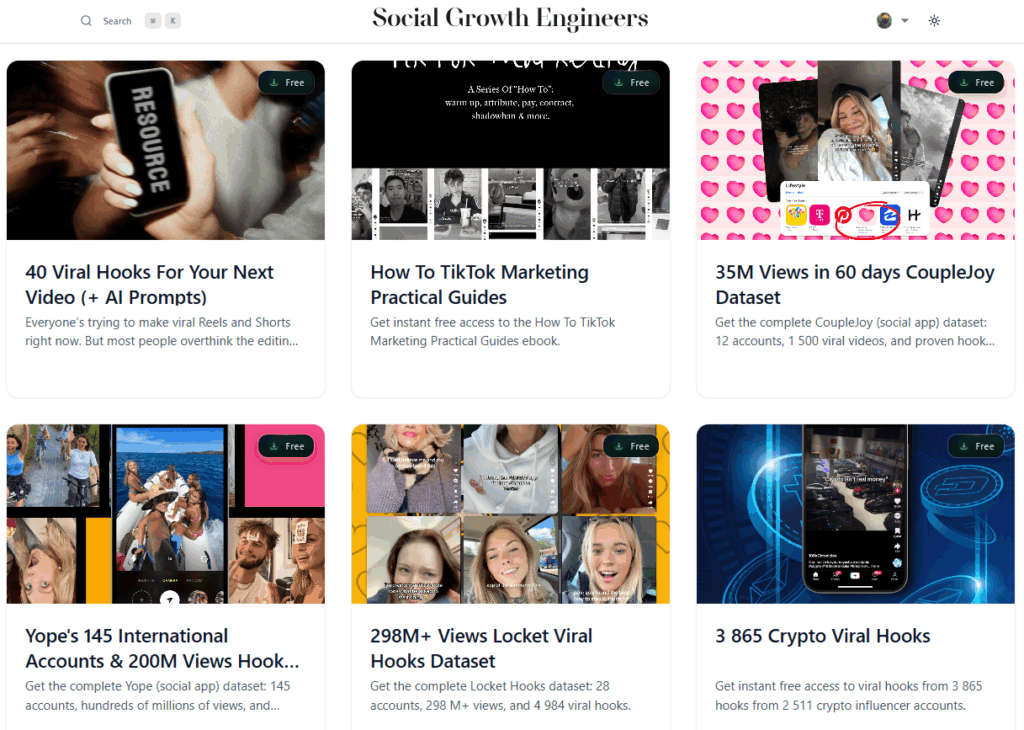
We’ve also included our hook data sets, the proven patterns, openings, and emotional angles that kept showing up across the highest-performing videos, along with plug-and-play format guides for POVs, testimonials, story-driven UGC, and slideshow virality. Find them all HERE
Everything here is built for speed: pick a playbook, plug it into your workflow, and start shipping content that’s already aligned with what works.
Ending Notes
2025 proved that organic growth isn’t luck, it’s systems, consistency, and creators who understand how people actually behave on TikTok. The apps that won weren’t the ones with the biggest budgets, but the ones that tested fast, listened to data, and kept showing up with stories people cared about.
As we head into 2026, the playbooks are clearer than ever: build community, ship content daily, respect user trust, and lean into formats that spark real emotion.
If you apply what’s inside this report, you’ll be building with the same strategies today’s top consumer apps use to scale from “unknown” to unavoidable. Let’s make 2026 your breakout year.
About Social Growth Engineers
Social Growth Engineers helps consumer apps grow smarter, faster, and with a lot more confidence.
We break down what actually works on TikTok and across short-form platforms from viral formats and creator strategies to retention-driven storytelling and data-backed playbooks.
Our library is packed with deep dives, growth frameworks, UGC examples, ambassador breakdowns, and real numbers pulled from the top-performing apps in the industry.
If you want more insights, templates, and weekly breakdowns of the strategies shaping consumer app growth, you can explore our full resource hub here: socialgrowthengineers.com
And for daily insights, case studies, and bite-sized lessons, follow us on LinkedIn: Social Growth Engineers.
Leave a Reply