
After completing a banking internship in New York City, Myles Slaytonfound himself and his friends stuck in the same loop: endless swiping, awkward first dates, and a deep mistrust of everyone behind the screen.
So instead of trying to build a “better algorithm,” he and his co-founders Willy Conzelman and Carter Munk flipped the entire logic of dating apps and rebuilt dating for Gen Z.
And that’s how Cerca was founded. The app that matches you through your existing social graph your contacts, mutuals, and extended circles.
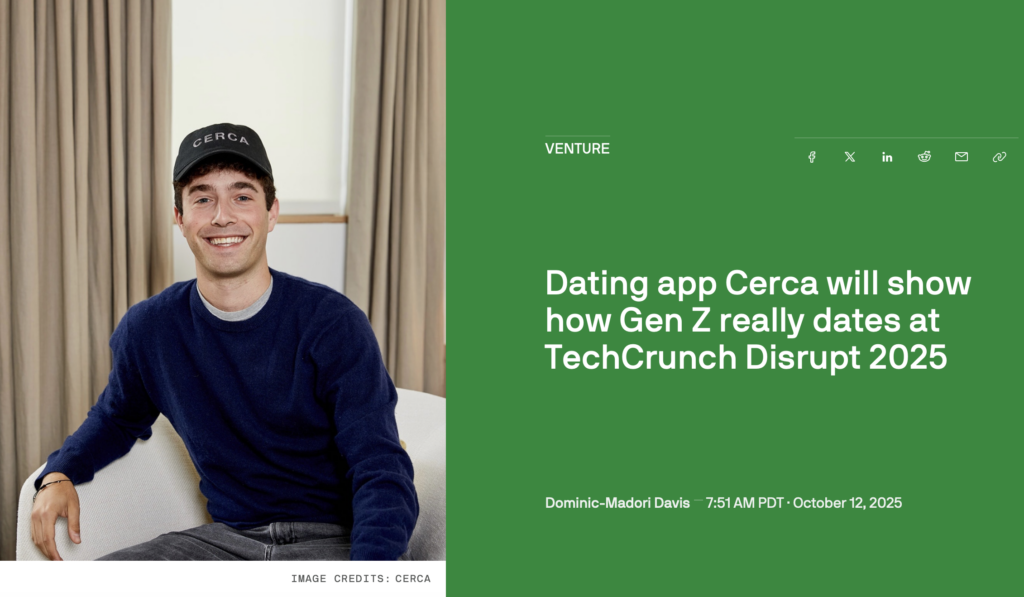
Just months after launch, Cerca raised $1.6M in seed funding and attracted 60,000 users, mostly across New York City and U.S. university campuses.
The Shift: From UGC Network to Founder-Led Storytelling
Most consumer apps scale TikTok through mass UGC.
Cerca didn’t.
Instead of spinning up hundreds of faceless creator accounts, Cerca put its founders directly on camera. Each founder runs multiple accounts across TikTok and Instagram, turning personal storytelling into the brand’s main growth channel.
With fewer accounts than most social-first apps, Cerca has pulled:
- 44.3M+ lifetime views
- Across just 60+ creator accounts in under 10 months since launch.
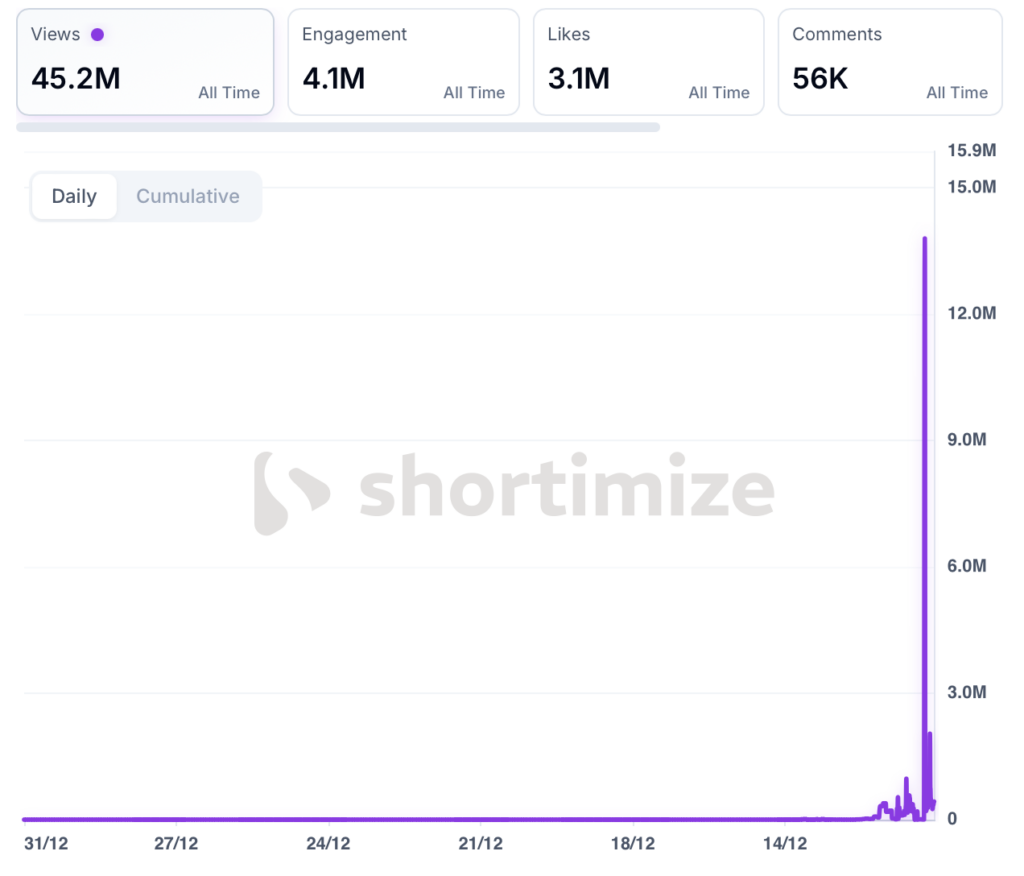
Over the last month alone, Cerca pulled 24.2M views from one format: founder-led, face-to-camera storytelling.
One of their engine is “Bad Dates → Better App.” And that format still runs.
The most viral videos this month came directly from Myles’ own account, with 3.4M views on a single post telling how “emails are in”.
In this video, he talks about how he walked up to a girl outside and asked for her email. The video got over 2,000 comments, but since he didn’t mention the app or tie the story back to Cerca, all the comments missed the point and didn’t lead to any conversions.
Another hit from his Instagram account was a “bad Hinge date story” that pulled 1.9 million views:
In this one, he talks about a weird date he went on, and two smart details stand out:
- Mentioning a well-known app like Hinge makes the story instantly click with people who use it too, and it feels more natural.
- He purposely misspells “Labubu” to spark comments, and it worked. One of them got over 10K likes.
Still, even with all the engagement, the story didn’t drive significant conversions. It was fun and relatable, but not built to get downloads. The only app CTA is on the post’s caption, but it seems to go unnoticed by most viewers.
The same thing happened with another post, this time about a “Raya breakdown.” Raya is a members-only dating app that some people online are calling “Tinder for the Illuminati.”
The video got 1.5 million views, but again, no one paid attention to the mention of the Cerca app in the caption. All the comments were either roasting Raya or just reacting to the story.
So far, it seems that all of their content is relying in this one single strategy:
- Storytime hook → Personal failure → Emotional shift
They’ve got the hook down. The talking format works, and even their founders are doing a solid job on camera, which isn’t always easy, especially with this kind of headshot, talking content.
But something’s still off. The team hasn’t figured out how to tie the viral content back to the product. They need a smoother way to weave the app into the story—either as how it all starts, or as the better option compared to the big dating apps they keep roasting.
Some other accounts are pulling solid views, but most fall into the same trap.
You can track them all here: https://app.shortimize.com/c/2b10eSEqynevRW
Leave a Reply