Welcome to a brand new category here on Social Growth Engineers.
The goal of The Growth Lab is to share new ideas and experiments we’re actively running and/or seeing happening around in a how-to, step-by-step way that you can easily implement yourself.
Today’s article is about Twitter marketing, but actually, it’s truly about doing TikTok marketing on Twitter.
That’s where it becomes interesting.
I call it TokTweeting.
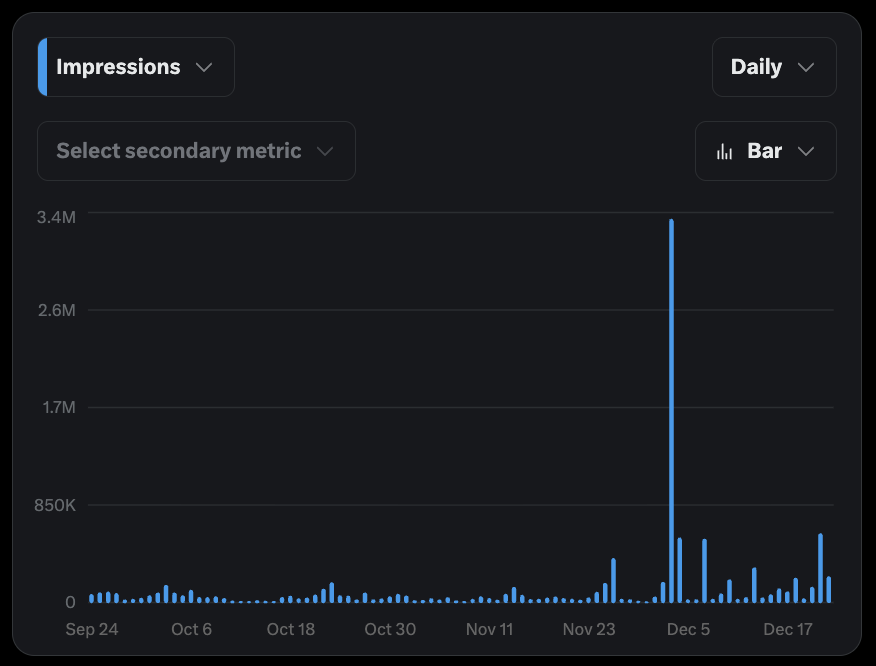
After Nikita took over, my account hit a bit of a valley of death, especially after the so-called “threadbois” were hit hard. I’m unsure whether I identify as one. I took the hit anyway.
On any algorithm-driven platform, change is part of the game.
So I changed my approach and began testing high-frequency, low-friction posts rather than publishing one long thread each day.
There was some light success, but nothing crazy. Still, it led to two important realizations.
Shorter and more aggressive hooks matter more than ever. Videos are also being pushed in a massive and disproportionate way.
Let us start with videos.
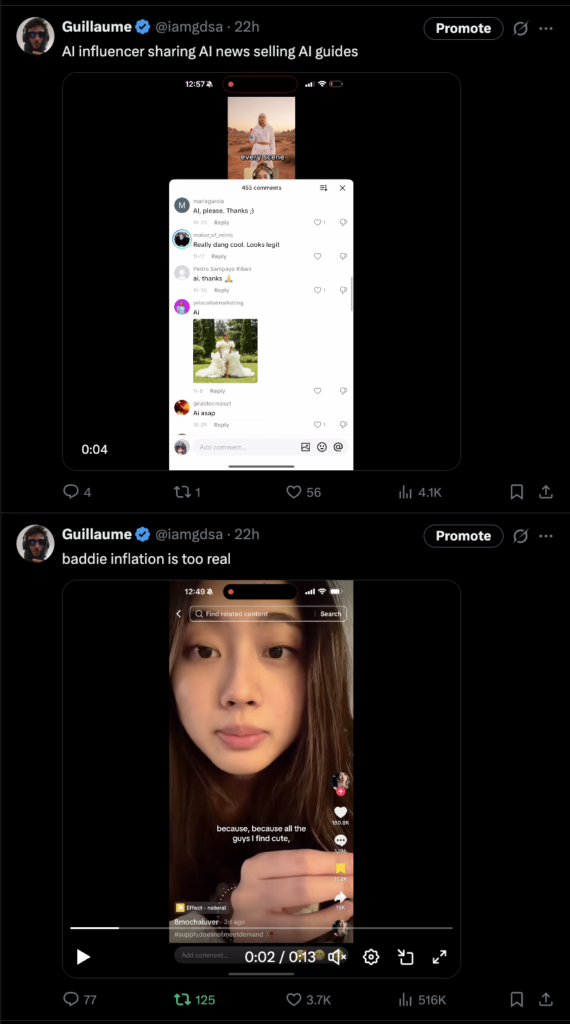
This was a simple side-by-side A/B test with a short hook and a short 13-sec video, posted one hour apart.
It is not perfectly scientific, but that does not matter. One post hit half a million views with 58 percent retention at completion, while the other only reached 33 percent.
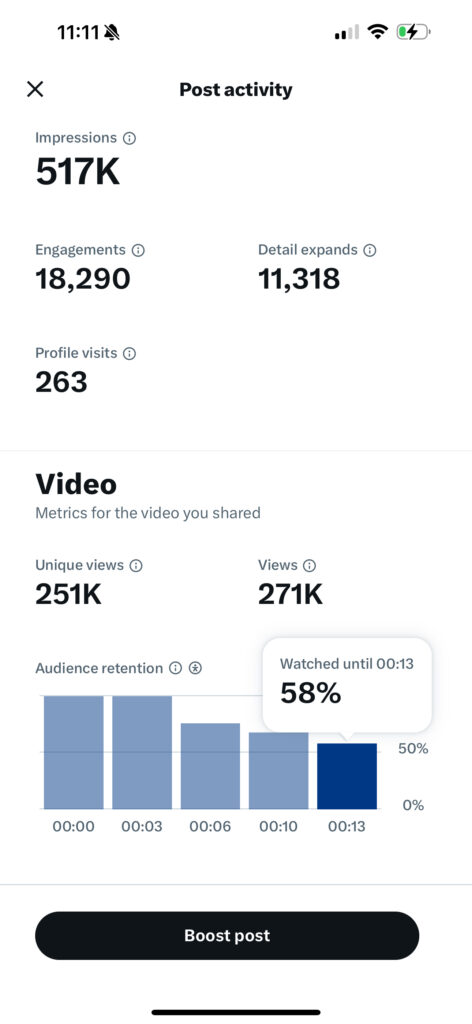
Retention is what seemed to make it go interstellar. It is not only this one. Another post here got two million views.
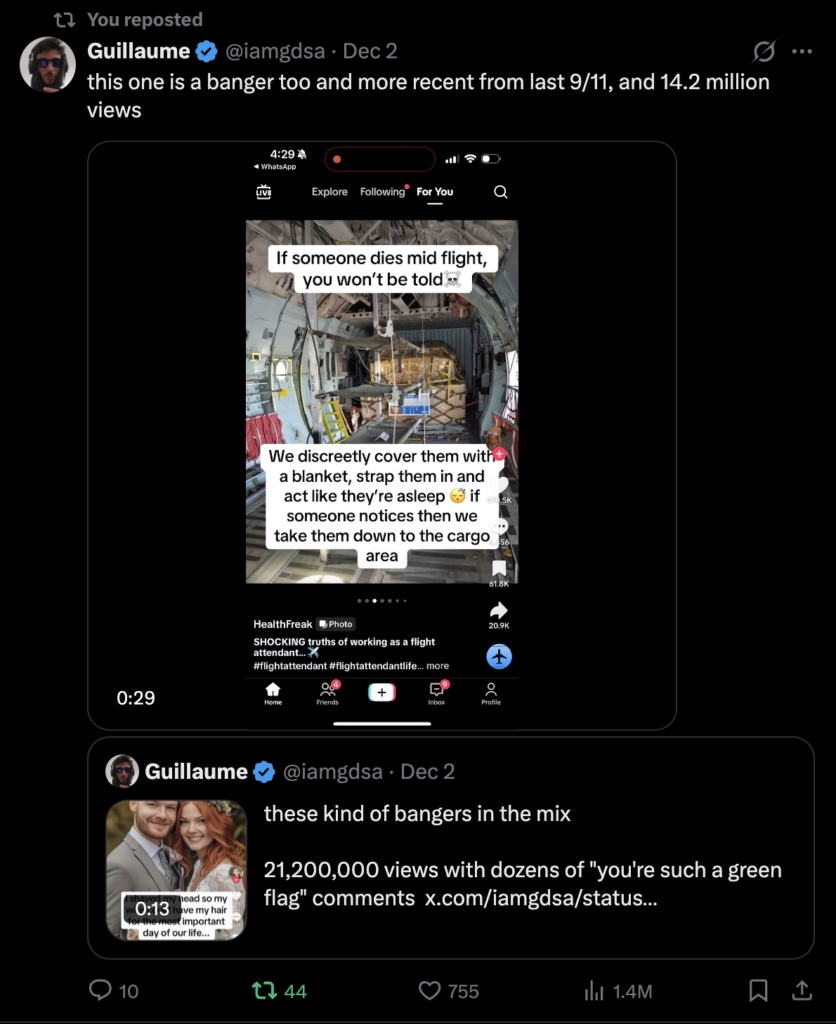
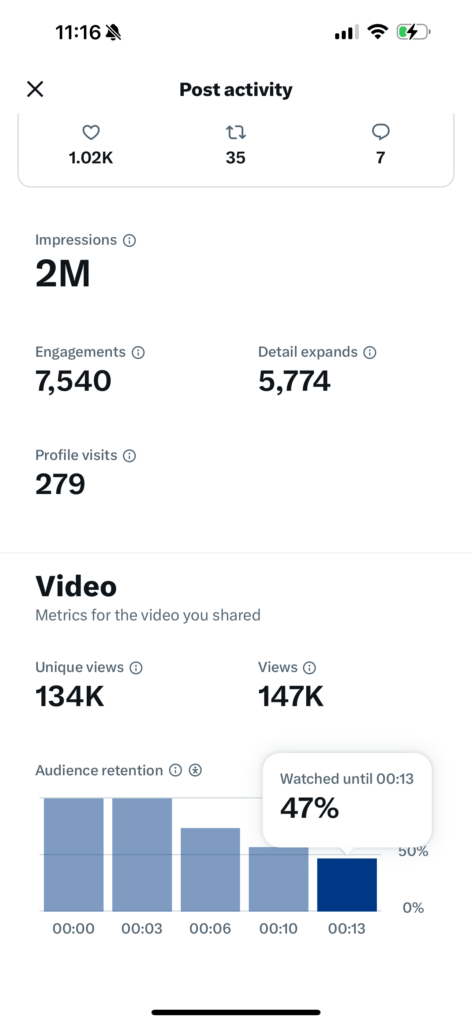
What stands out is that engagement barely matters anymore.
That video had only 7 comments for 2 million views.
This shows that retention is clearly one key outsized signal in this new video algorithm.
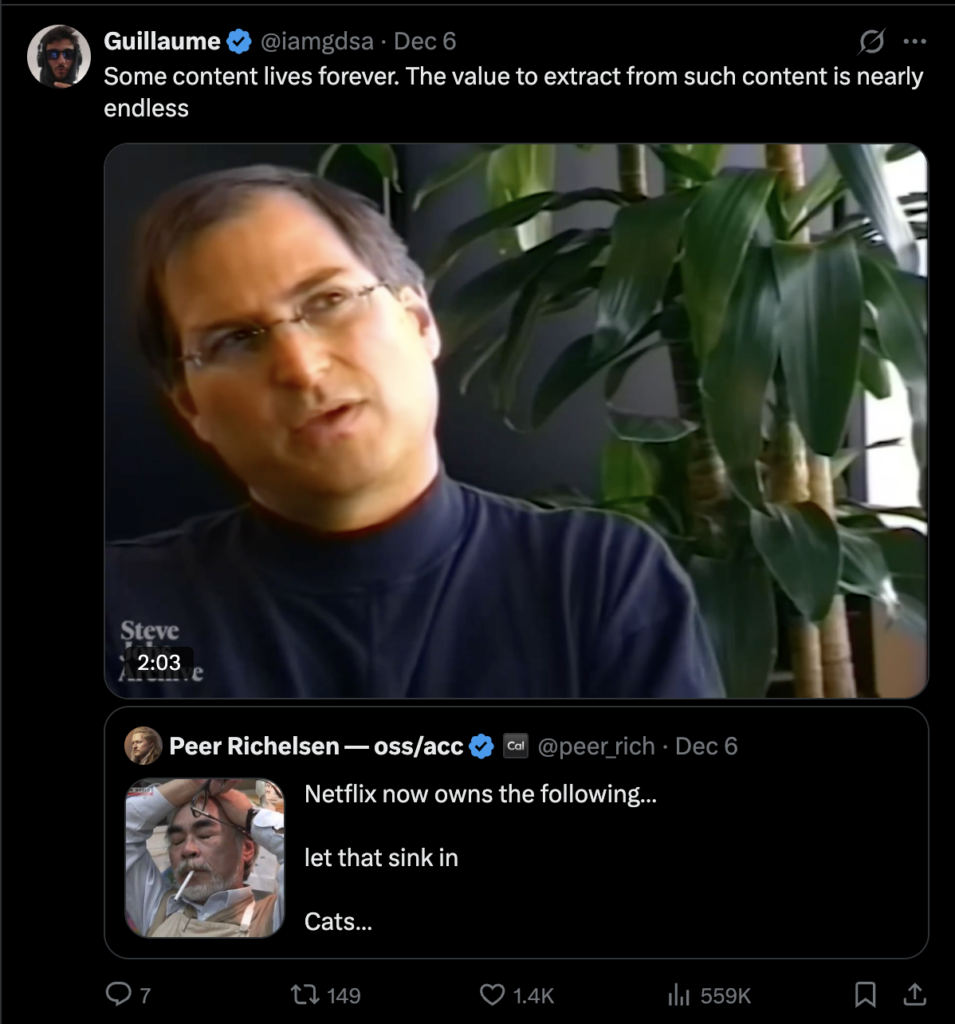
I see the same pattern even with 16 by 9 videos.
One small note on quote tweets. The platform appears to reward discussion more, which is why many quote tweets are being pushed forward.
Now back to Toktweeting. What is it exactly? It is about applying the same growth engineering tactics used on TikTok.
Instead of posting content like this.
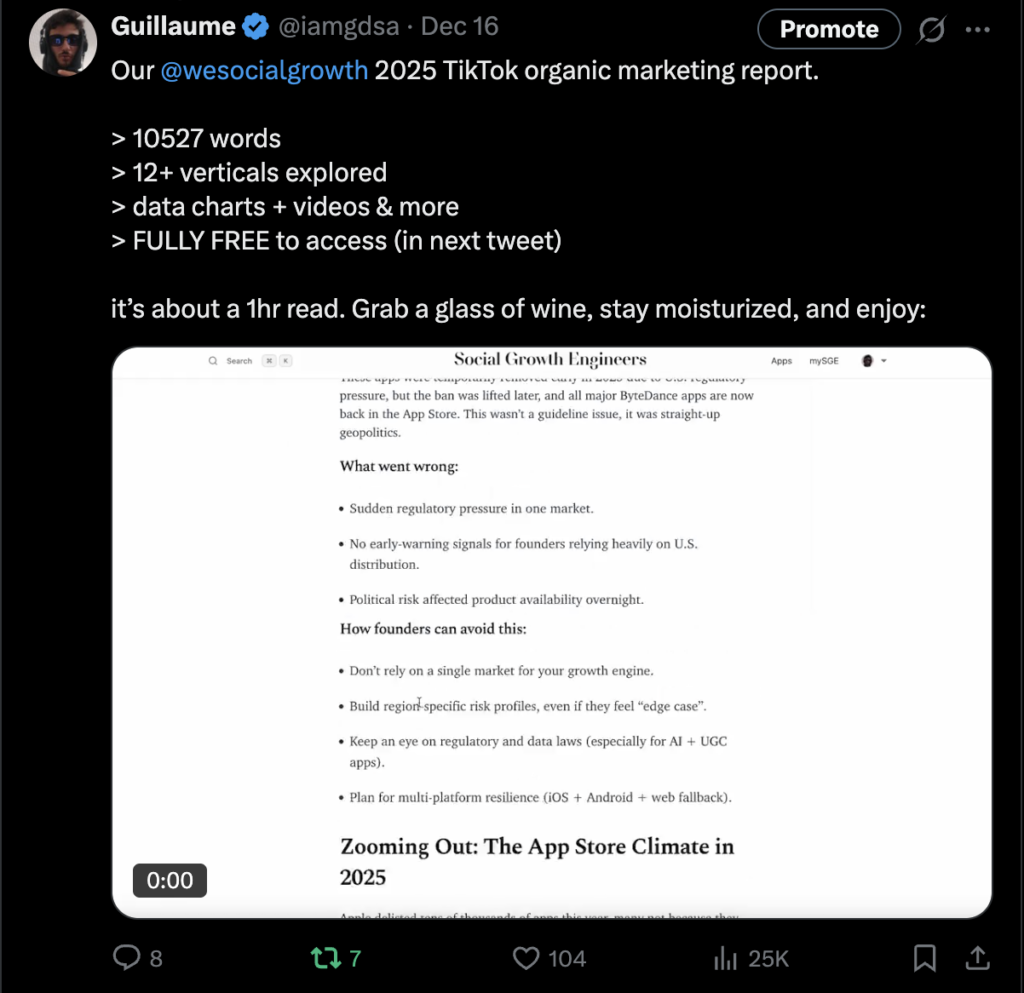
These hooks feel mostly informational or like announcements, which is what most startups and founders do.
Instead, you take the opposite approach and TokTweet with hooks like this.
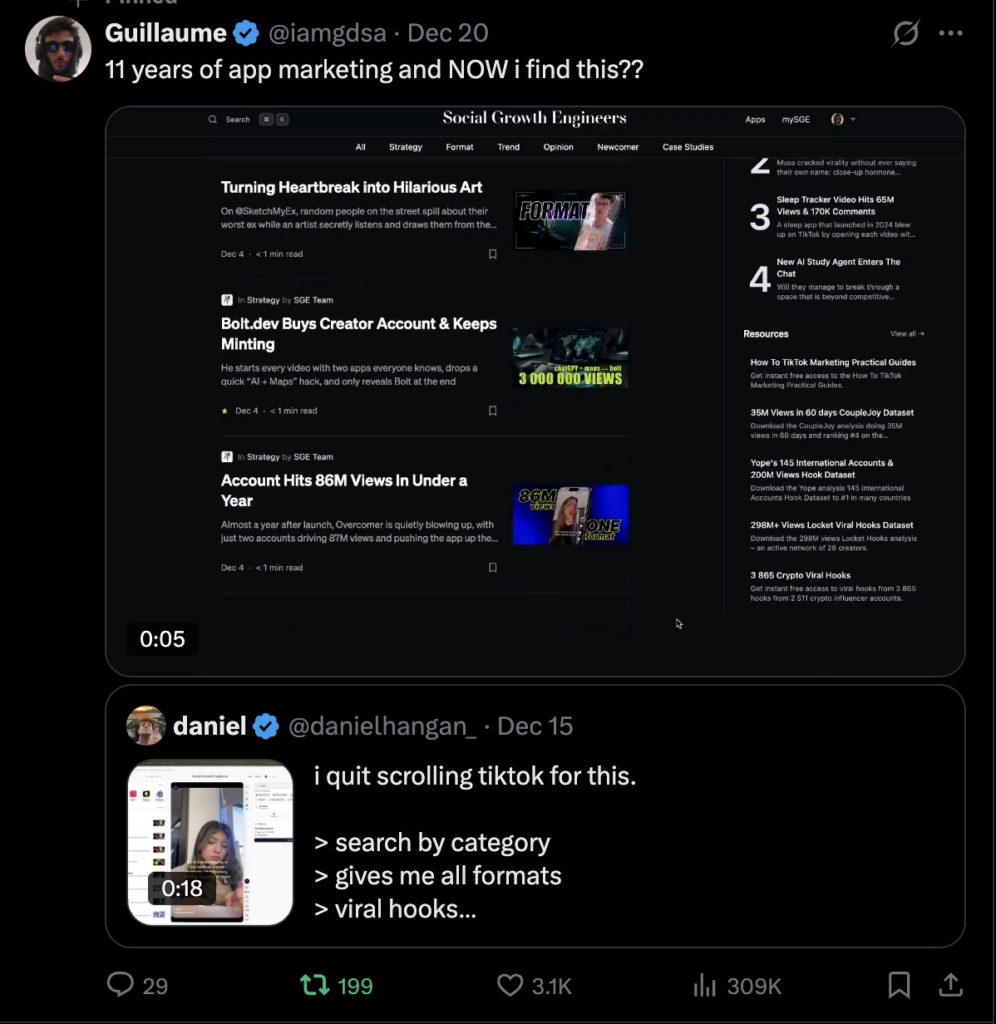
This is a word-for-word copy of a TikTok hook from Nomadtable. I am not sure where it originally came from.
That tweet generated five thousand bookmarks, which is a significant number here.
You get the idea. I quickly made another one titled, “I am addicted to this website.”
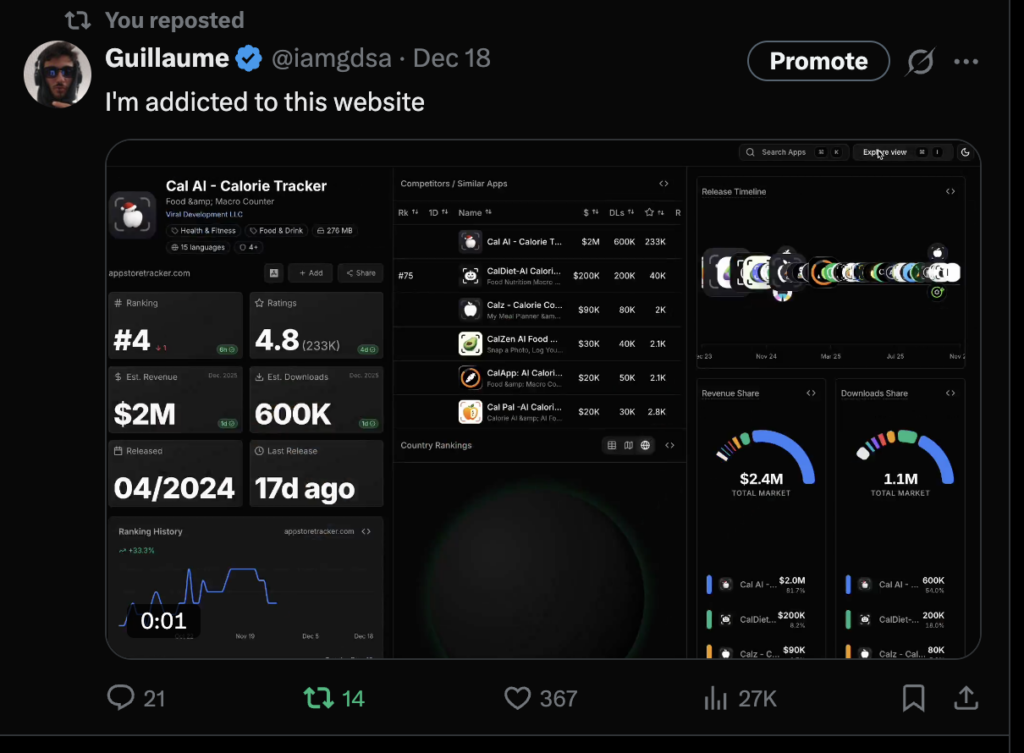
For a tweet that took seconds to make, it drove a strong number of sessions. You can see the same exact patterns as on TikTok.
Fast-paced video edits, lots of graphics that grab attention, and a short, intense hook.
So what does this mean in practice?
The TikTok videos I repost with short hooks tend to reach a very mainstream audience. They do not drive many followers, but they spread widely.
That makes them ideal for consumer apps that know how to engineer virality, just like on TikTok.
The direct promotion of TokTweets is even more interesting to me.
People may simply be tired of generic announcements like “We raised a $300M pre-seed round” or “We are launching tool X that will revolutionize AI video”. Instead, like TikTok users, they are more receptive to aggressive, highly engaging, and addictive indirect shills.
Twitter is shifting away from a friend-to-friend network and quickly becoming an everyone-to-everyone platform.
By pushing content from smaller accounts, Nikita is effectively turning Twitter into TikTok, where anyone can go viral and where the same strategies used on TikTok or Reels now apply.
Rather than spending $30K on a perfectly polished launch video and tweet, you take the opposite route. You ship raw, aggressive, TikTok-style tweets.
Food for thought. Experimentation never stops.
Leave a Reply