Omegle met looksmaxxing
That is just is the easiest way to understand Omoggle, a new (18+) website starting to take over streamer clips and short-form feeds.
It’s all pretty straightforward.
You enter a live one-to-one webcam battle with a stranger, the website scans both faces, gives each person an attractiveness score from 1 to 10, and then decides who “mogged” the other person.
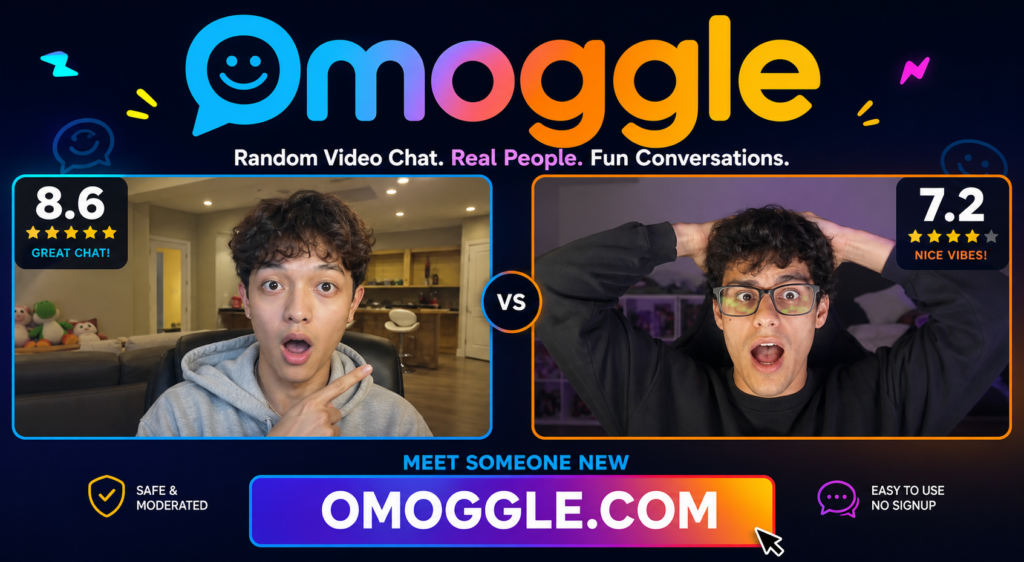
For those of us usually standing outside this niche: “mogging” basically means beating someone in attractiveness. The term comes from looksmaxxing internet culture, where users obsess over facial features, ratings, jawlines, symmetry, and status labels like “Chadlite” or “Sub3.” Omoggle just takes that language and turns it into a real-time game.
The result is a 2026 version of Omegle, built for TikTok and Gen Z, feeding straight into the looksmaxxing trend.
A simple website, a viral mechanism
Omoggle does not look like a polished consumer app. In fact, part of the online reaction has been that the website looks amateurish, almost like the most obvious vibe coded project. The design is rough, the rating system is not always accurate, and some of the results seem completely off.
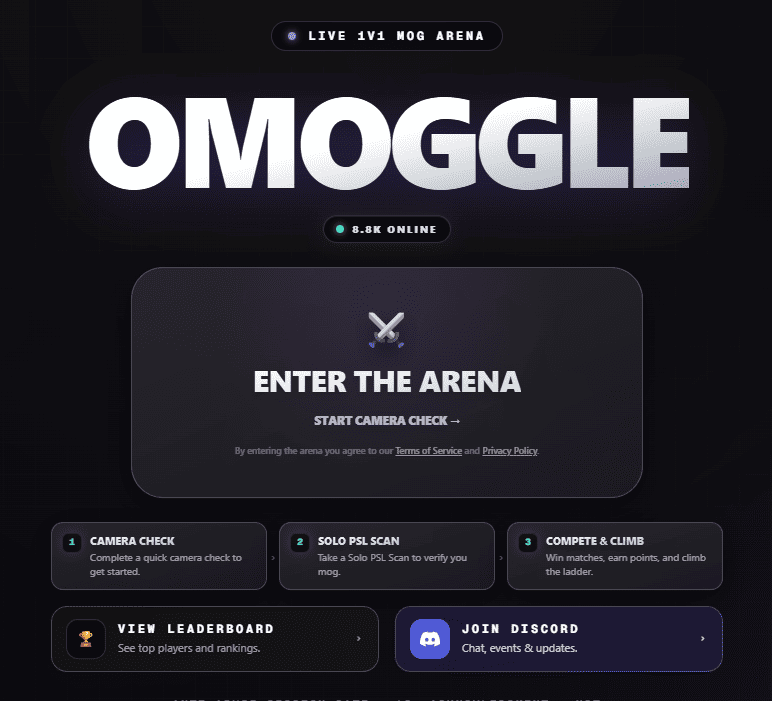
But that has not stopped it from spreading.
The reason is that Omoggle is instantly understandable. Everyone already knows how Omegle works. You turn on your camera, get paired with a stranger, and something unpredictable happens. Everyone in the Gen Z internet bubble also understands the idea of looksmaxxing, or at least recognizes the language around face ratings and “mogging.”
Omoggle simply combines both.
Streamers make it explode
The biggest distribution push came from Twitch and streamer culture. Huge creators like xQc, StableRonaldo, JasonTheWeen, Jynxzi, and others started using the website live, which created the perfect top-of-funnel moment for Omoggle.
Streamers are a natural fit for this kind of product because they already need easy live segments that generate reactions from chat. Omoggle gives them that in a 20-second loop. The streamer enters a battle, gets scored against a random person, reacts to the result, and chat immediately decides whether the rating was fair or completely broken.
That’s all the content needs, and it feels like it was built for clipping.
When a streamer wins, it becomes a flex. When a streamer loses, it’s even better.
When the scan gives a random person a higher score than someone who clearly “should” win, the clip becomes funny, controversial, and easy to repost.
The product creates conflict without needing a script.
Product demo = format
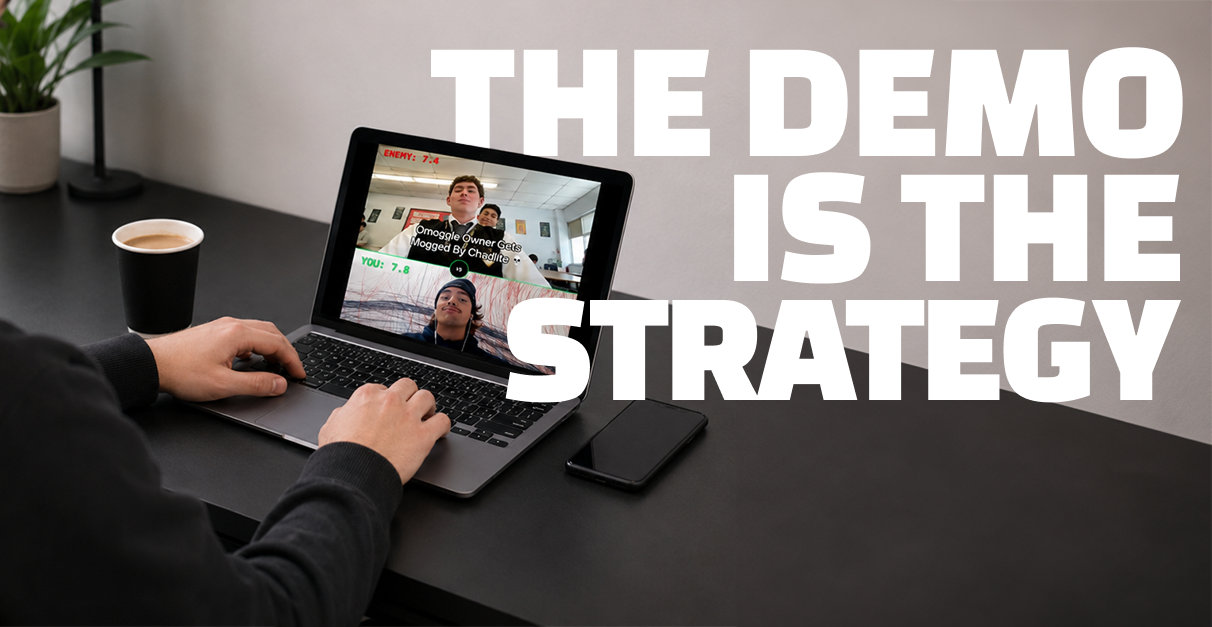
The most interesting part of Omoggle is that the company does not need to invent a separate content strategy around the website. The demo is the format.
Their own TikTok page is already proving this. On April 21, the account posted a clip with the hook:
“Omoggle owner gets Mogged by Chadlite” → 2.1M views
The video shows the owner losing an attractiveness battle against a random guy in class. There is no complicated creative concept here. And yet, it just works.
The bigger lesson
Omoggle is pure product-led virality built for short-form.
The website creates moments people want to record, react to, argue about, and repost. Streamers turn it into live content, clippers turn it into short-form clips, and viewers understand the concept instantly.
It proves a simple point: consumer products do not always need perfect polish to spread. They need one repeatable action that creates a visible moment.
Omoggle has that.
It turned random webcam chats into a public status game.
And right now, that is enough to make people keep watching.
Leave a Reply